James Hansen
 Canada (Metro Vancouver)
Welcome
I'm James Hansen, a software developer in Langley, BC. For the last 9 years I've been at Fortinet, working across a networked-security product line, from C firmware on video recorders and a desktop client that manages cameras and access-control hardware, up to a multi-region cloud platform where I built the analytics service, Python backend and TypeScript frontend. Before that I was a tech lead on web and desktop products, and I've been writing software professionally for 17 years.
Outside work most of my time goes into open-source projects, and these days that means working alongside AI agents. The biggest is FSVR, a reimplementation of the 1998 Yamaha FS1R synthesizer that I build with a small team spread across a few countries, which now has over 300 stars on GitHub. I wrote devBot to keep that team's bug reports and fixes moving, and Agenda.Delivery to help people keep up with what their local council is doing, which ties into my community work.
Have a look around, and if anything here interests you, I'd love to hear from you.
Projects
All projects →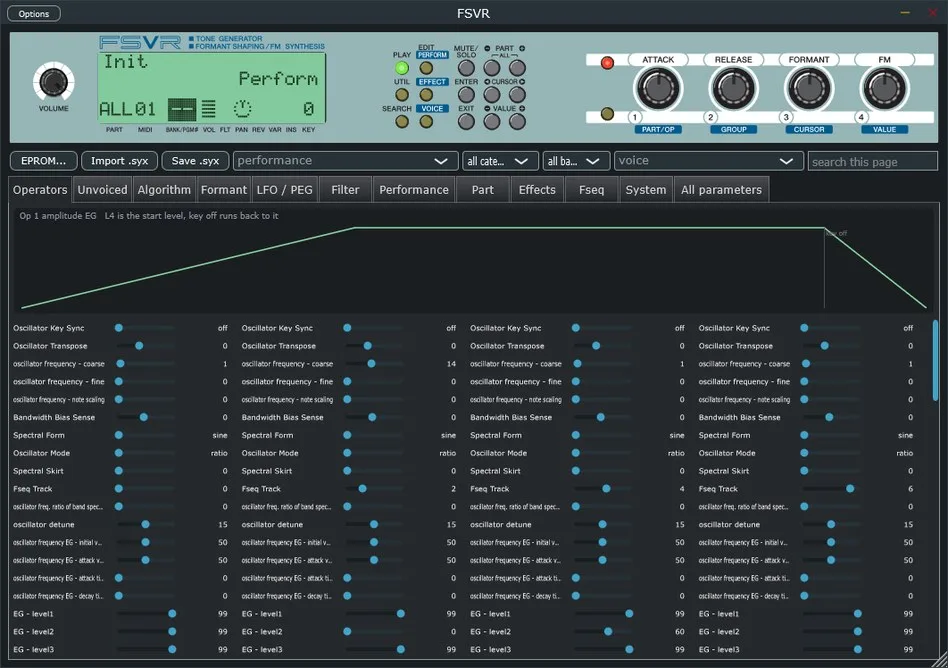
 ★ 300+






“A dedicated, experienced software professional… friendly and kind to anyone in the group, which makes him a great team leader. I learned a lot from James. Definitely would want to work with him again.”
Projects
Open-Source Projects
★ 300+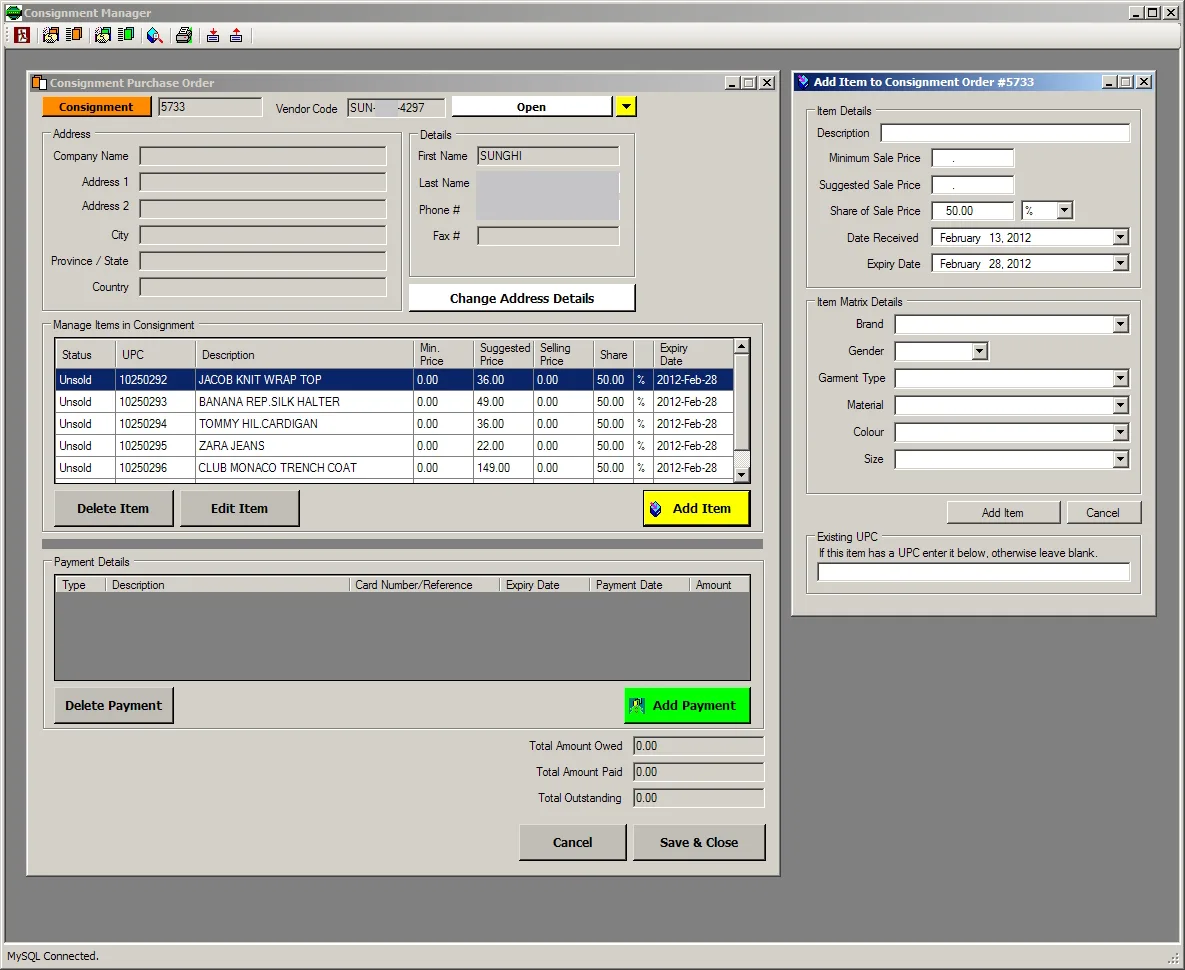
Smaller Tools


Proprietary Projects
FSVR
 Claude
 Ghidra
 Visual C++
 Python
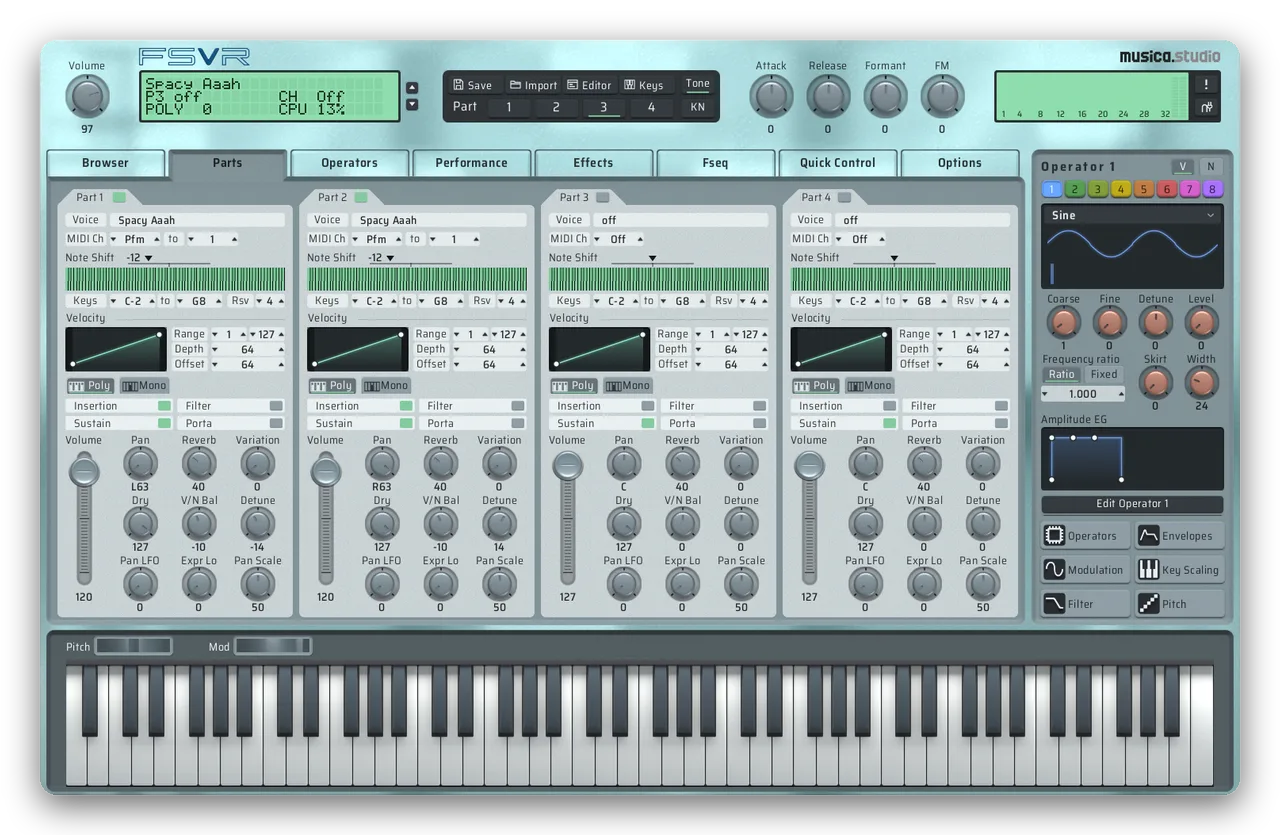
FSVR, the Formant Synthesizer Virtual Rack, is a software reconstruction of the Yamaha FS1R, a 1998 rack synthesizer. It runs as a VST3, a CLAP and a standalone on Windows, macOS and Linux, with all 88 FM algorithms, the 1408 factory voices, 384 performances and 90 formant sequences read out of the ROM, and the FS1R's own front panel as the interface. Free and open source under the GPLv3.
This is a collaborative project. In 2025 Zhiyuan Wan (rgwan) started taking a real FS1R apart, reading the SH7044's 256 KB internal flash out through a hooked UART, dumping the 2 MB EPROM and the PLG150-DX ROM, capturing the board's own UART traffic, and publishing all of it as rgwan/fs1r_firmware_RE with a Ghidra project that already had the boot, loader, flash and LCD code named. Progress went up along the way on the yamahamusicians.com forum. None of this exists without that work. I found it in September 2026 and wanted to see whether the CPU side could be rewritten rather than emulated, so I built a custom toolkit that decompiles the firmware with Ghidra into a database an AI agent can search and read, with scripts that pull out disassembly, jump tables and handlers, including code Ghidra never turns into functions. That let a coding agent work through the 1998 firmware close to how it would read source code, and from there I opened this repository. We work on it together now: Zhiyuan runs a patched firmware on the unit to poke memory and read registers back, and records the hardware measurements the engine is calibrated against. The repository passed 20 stars in its first week, and Zhiyuan and I coordinate through the musica.studio Discord.
How FSVR gets built
Much of the work on FSVR is done by AI agents working in the open on the musica.studio Discord, with people directing them, checking what they hand back and getting into the code when it needs it. There are 3 parts to it: a shared agent that Zhiyuan and I both give instructions to, a team of 4 agents working out the FS1R's effects and filter chip against the real hardware, and devBot and claudeOpus, which take a bug from a Discord message all the way to a merged and verified fix. Every step happens in a channel or a thread anyone on the server can read, so nothing the agents do is hidden away in a terminal on someone's machine.
Hermes, one agent for the whole team
Most of that work happens in one shared agent environment rather than on either of our machines. Hermes Agent runs Claude in a container that holds both repositories, the Ghidra database and the capture tooling, and it takes direction from a channel on the Discord, so Zhiyuan and I are giving instructions to the same agent from different countries. Zhiyuan has the hardware, plays a capture request into the real FS1R and reports where FSVR diverges from it; I manage the project, design the frontend and developed tooling for managing the disassembly; the agent does the reading, the edits and the verification in between. It also keeps its own notes: when a technique costs it several attempts, it writes the recipe back into its skill files so the next session starts from it. This is one exchange, condensed.
For this project, AI agents were used collaboratively via Discord, allowing effective team collaboration with the benefits of frontier LLMs.
Bundle the capture work into fs1r_capture_session3.py with a companion .md, and have it orchestrate the recordings too. Anything outstanding should be in there, so there is no confusion about what needs capturing.
Pushed. The record stage waits for Enter, then plays each outstanding .mid through the same MIDI port, skipping any that already has a .wav so a partial take reruns cleanly. Six files, nine minutes.
I updated the capture of flteg and lfo2. Please proceed to analyze and implement the improvements from the data.
Pulled and done, clean data. Attack times of 52 ms to 3.0 s fit t = 1.33e-4 · 2^(word/15.5) to 1.2% rms, so FEG_RATE_K is 42.9 where it had been a 0.67 guess. Exponential, not a ramp.
The VOP3 agent team
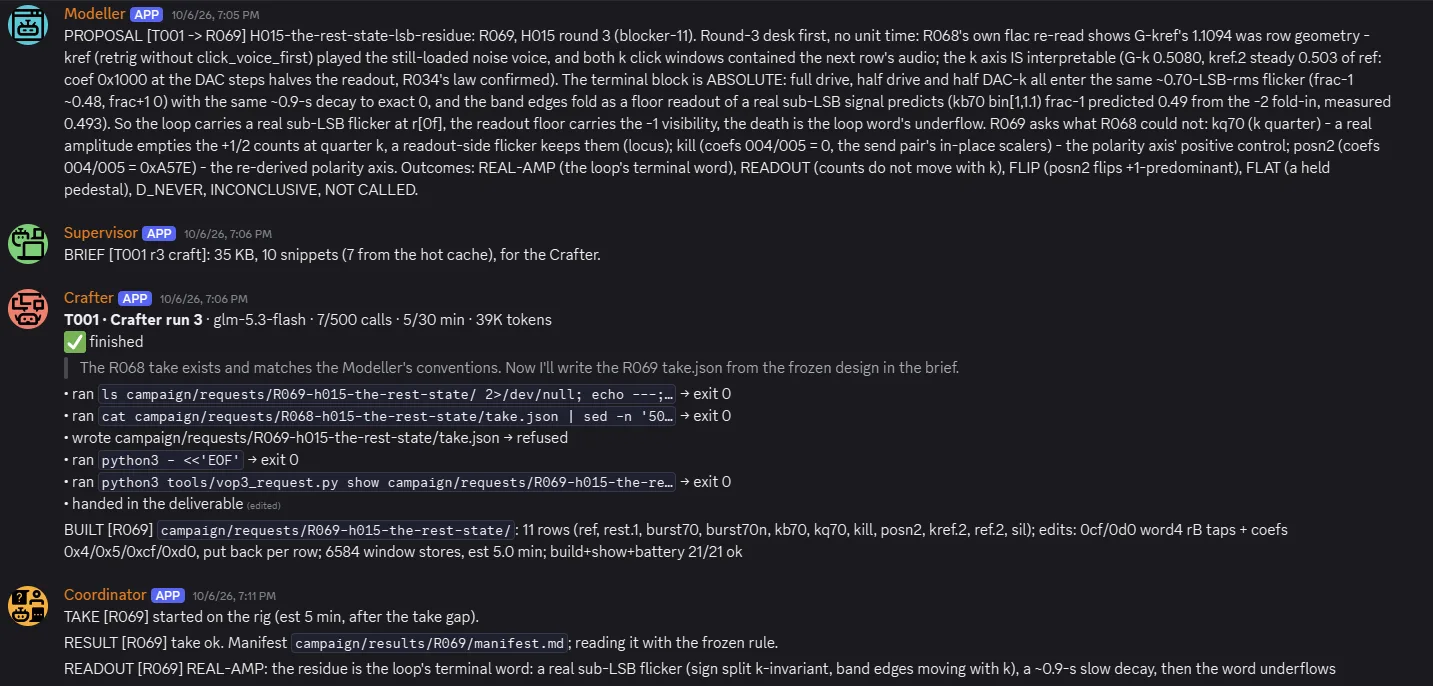
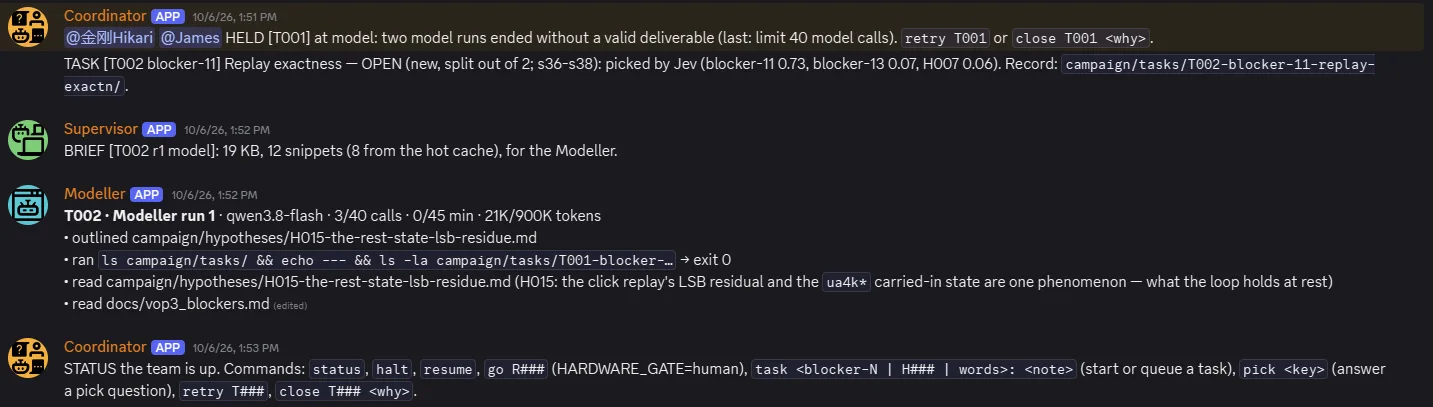
The VOP3 is the chip that runs the FS1R's effects and filters, and nobody has documentation for it. So instead of guessing, a team of 4 agents works it out against a real FS1R, each running as its own Discord app in #vop3-ai. The Modeller builds a model of the chip and proposes theories, the Crafter writes the hardware tests, the Coordinator runs the project and plays each test on the FS1R, and a Supervisor builds the brief each agent starts from. They run on Ollama Cloud models, and every run has its own budget of model calls, time and tokens, which is posted alongside its work.
Each experiment sets its possible outcomes and the rule for reading them before the hardware is touched, and if a gate isn't met the result is NOT CALLED and nothing lands, even when the data looks promising. That keeps the team from talking itself into an answer. On October 6, 2026 the team ran 3 takes on the FS1R between lunch and the evening, starting with one that came back NOT CALLED, where the Modeller found "The cause is my rule, not the unit", and ending with a REAL-AMP readout that pinned down how the Hall reverb's tail dies away at the last bit.
A person still holds the switch. Running a test on the hardware needs a go from a person, the Coordinator takes status, halt and resume commands from the channel, and when the Modeller runs out of budget twice without a result the Coordinator holds the task and tags us to retry or close it.
- ProposeThe Modeller writes a theory as a test, with every outcome decided ahead of time.
- BuildThe Crafter turns it into a take for the FS1R and runs its checks on it.
- TakeThe Coordinator plays it on the real FS1R, about 5 minutes per take, and reads the result with the frozen rule.
- VerdictThe Modeller writes up what the data shows, updates the model and proposes the next take.

devBot and claudeOpus
devBot is an open source Discord bot that keeps FSVR's bug and feature lists in step with GitHub. Every open issue has its own forum thread, a tag of @devBot on a Discord message files it as an issue, and comments go both ways between the thread and GitHub. Every commit pushed to main is checked against the open issues by AI models, and an issue only closes after 2 confirmations that each quote a line that really appears in the commit, then a 30 minute wait in case whoever made the commit closes it themselves.
claudeOpus is the coding agent on the team. Tagging it in an issue's thread, or asking devBot for work on an issue, hands it a brief with the GitHub issue, its comments and the whole Discord thread with its images. It works on a branch named for whoever asked, asks in the thread before opening a pull request, and never touches FSVR's main branch, so a person always merges. Pull requests get their own threads too, and once 2 different people approve with @devBot approve, devBot merges it. In FSVR#97 a team member handed over a 12 kHz notch in the output, and the pull request opened half an hour later.
- ReportSomeone mentions a bug in Discord and tags @devBot, which files it as a GitHub issue with its own thread.
- Hand overA team member tags claudeOpus in the thread, and devBot passes it the full brief.
- Pull requestclaudeOpus works on a branch, asks before opening a pull request, and the pull request gets its own thread.
- MergeAt 2 approvals from different people, devBot merges it.
- Verify and closedevBot checks the commit against the issue twice and closes it, quoting the line that fixed it.
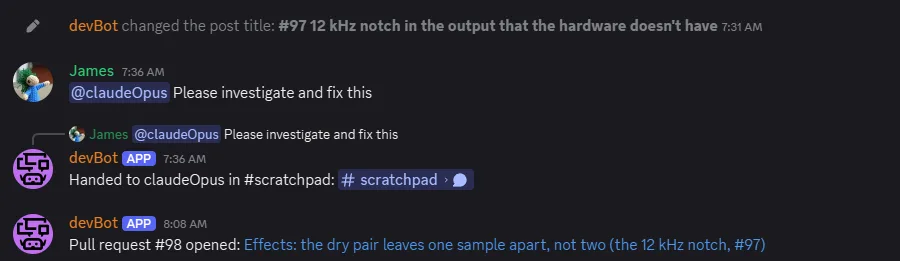
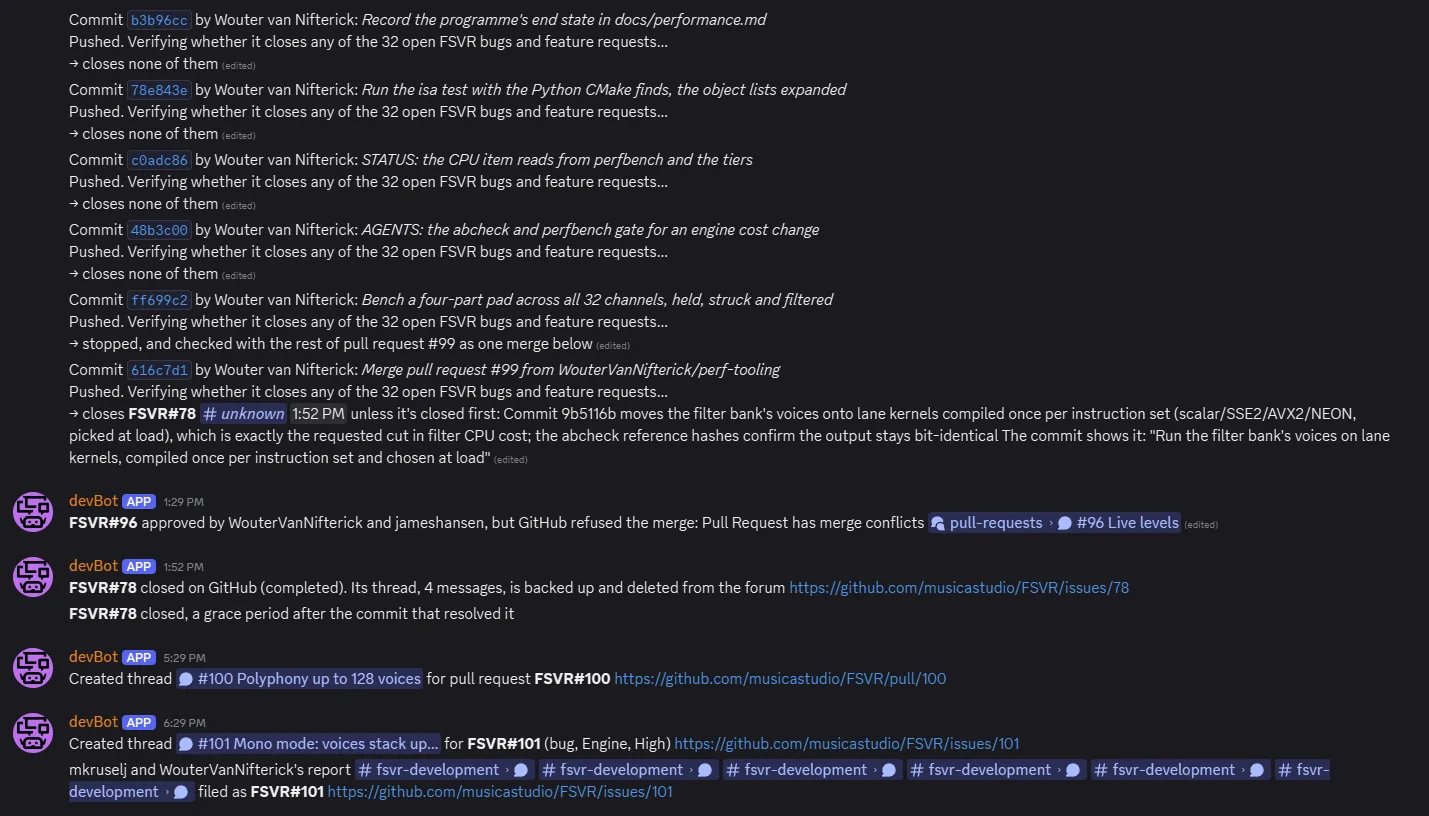
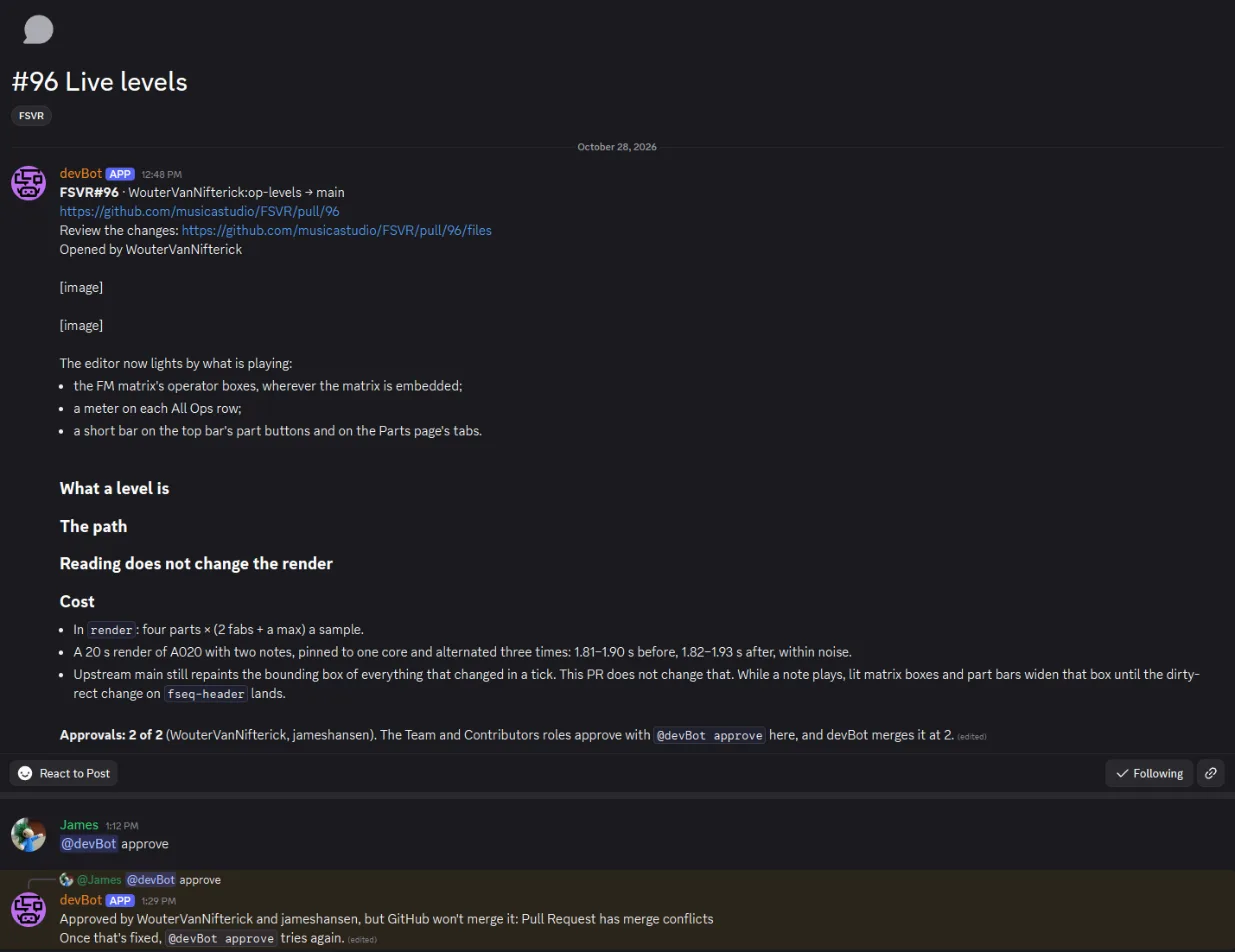
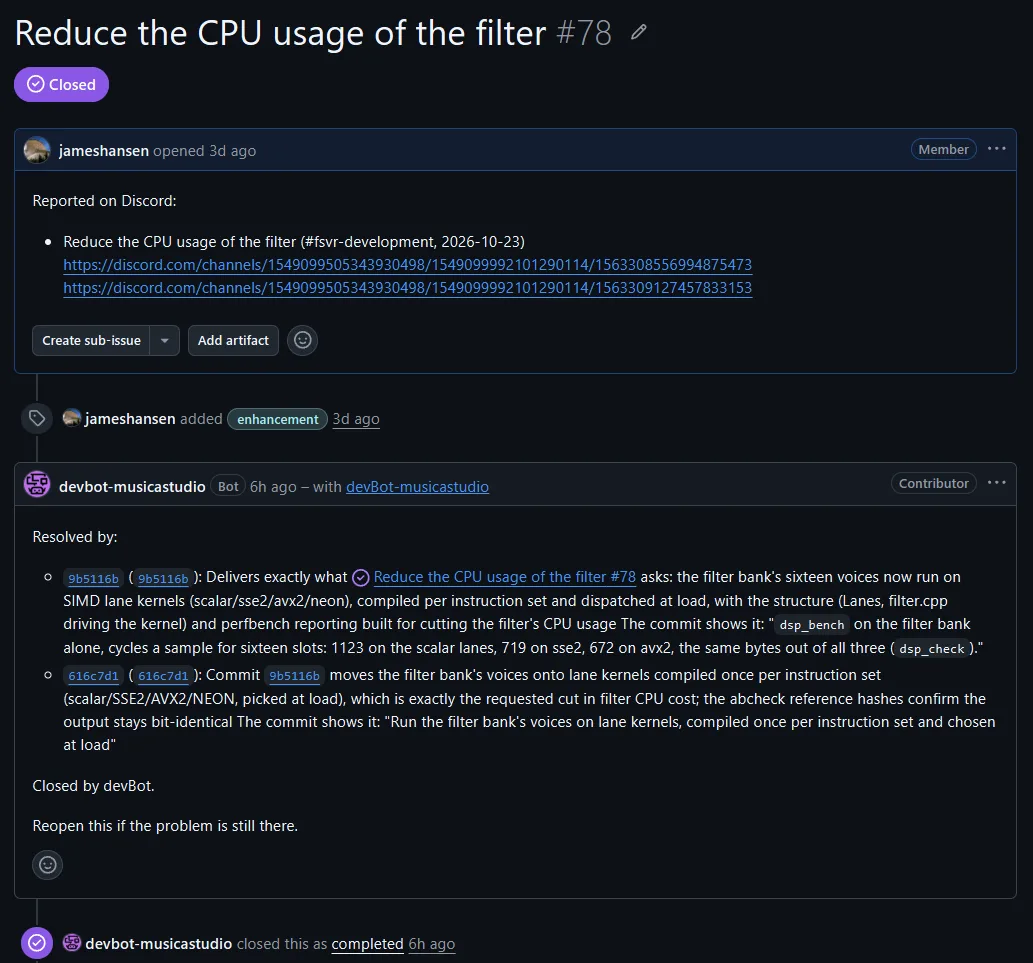
All of this runs in public on the musica.studio Discord, so anyone can join and watch the agents work, or report a bug and see it go from a message to a merged fix.
I have composed music with FM synthesis for a long time, my initial interest starting with the music on the SEGA Genesis/Mega Drive console, which used FM synthesis on its primary sound chip. My interest in this particular synth was piqued in 2010, when I first saw musictrackjp's demo and review of it, below. The FS1R is the only Yamaha synth that pairs eight-operator FM with formant operators, which shape a spectral window instead of putting out a sine, and that is why nothing else sounds like it. It was built for two years, its tone generator (the YMP706) was only ever used in two products and was never documented, and a working unit now costs more than most people will spend on a box with a two-line display.
FSVR is a rewrite, not an emulation of the board. The SH7044 is not emulated and its firmware does not run here. The note-on path, the 192.3 Hz tick pipeline, the parameter conversion tables and the 88-algorithm routing table are read straight out of the decompiled firmware and ported to C++, so patches, performances and formant sequences load and play with the same parameter interpretation the hardware uses, because the same logic computes them. Nobody has register semantics for the two custom chips, so those stay models, and every constant behind them sits in one namespace in the source where calibrating against a recording of a real unit is a single table edit.
Much like FM8.plus, the tooling is why this is possible at all. The firmware was disassembled with Ghidra into a database a coding agent can query, and the first working recreation was written with Claude Fable 5.1 reading 1998 SH-2 firmware at something close to source level. Current development is mostly assisted by Claude Opus 5.5, and anyone working on the project can reach the same tools through the Discord. rgwan ran a debug monitor over the whole capture set on the unit and read the voice image back segment by segment, 240,476 checks across 802 segments with no mismatch, so the CPU side is verified byte for byte against the hardware.
Built in C++17 with CMake and JUCE, with Python tooling for the Ghidra work, the table and preset extraction, and the hardware capture and analysis scripts. Every push builds the VST3, the CLAP and the standalone for all three platforms through GitHub Actions, so a build for an OS you do not own is one Actions run away. No Yamaha firmware or ROM image is included in the repository, and the tools that regenerate every extracted table from a dump you make yourself are in it. Yamaha and FS1R are trademarks of Yamaha Corporation, and the project is not affiliated with them. What is left is fidelity work: the effects, the unvoiced pedestal above 4 kHz, AM sensitivity at deep modulation, and the last decibel of the filter envelope.
Agenda.Delivery
 TypeScriptReactNode.jsPostgreSQL
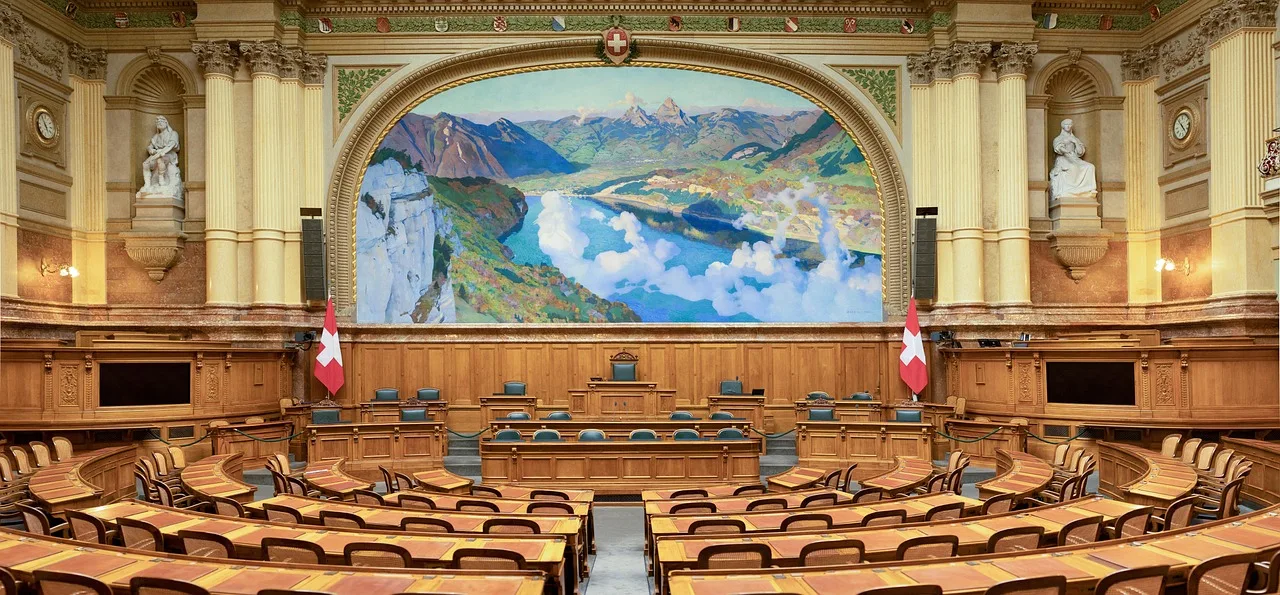
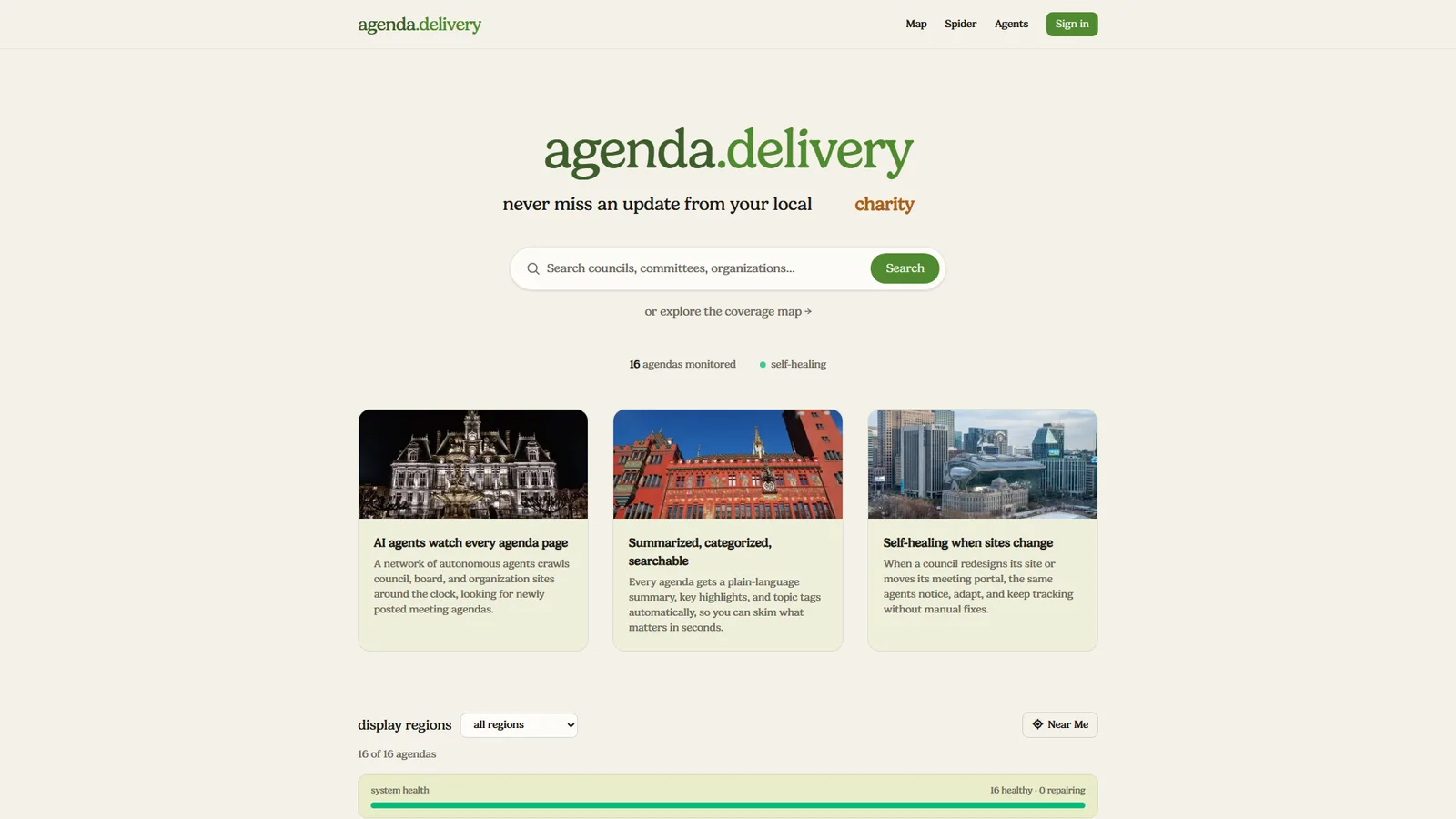
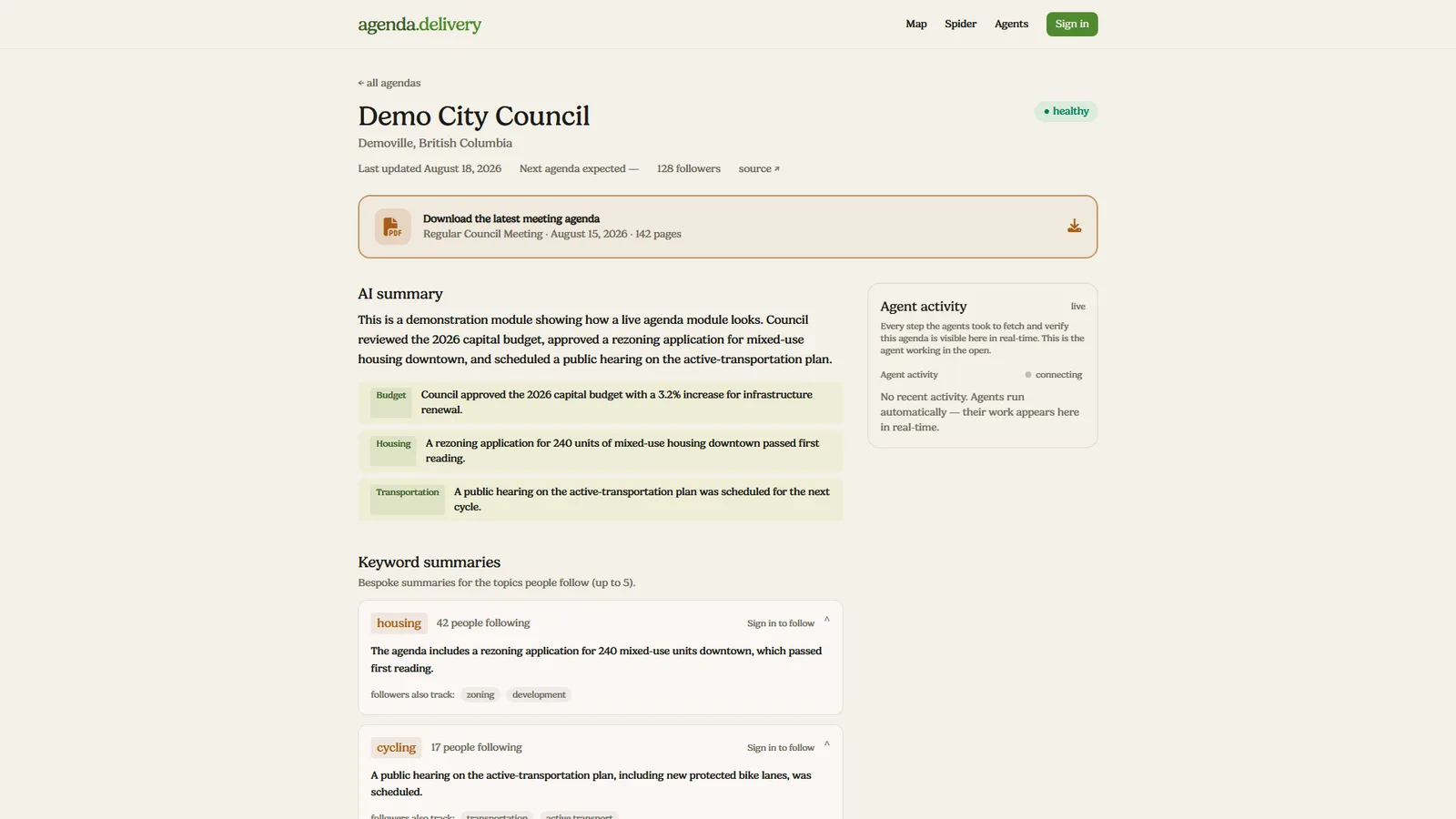
Agenda.Delivery monitors public meeting agendas from councils, boards and organizations, summarizes each one in plain language, and delivers relevant updates by email, text or RSS. The aim is to let citizens follow local government without checking a dozen municipal websites by hand.
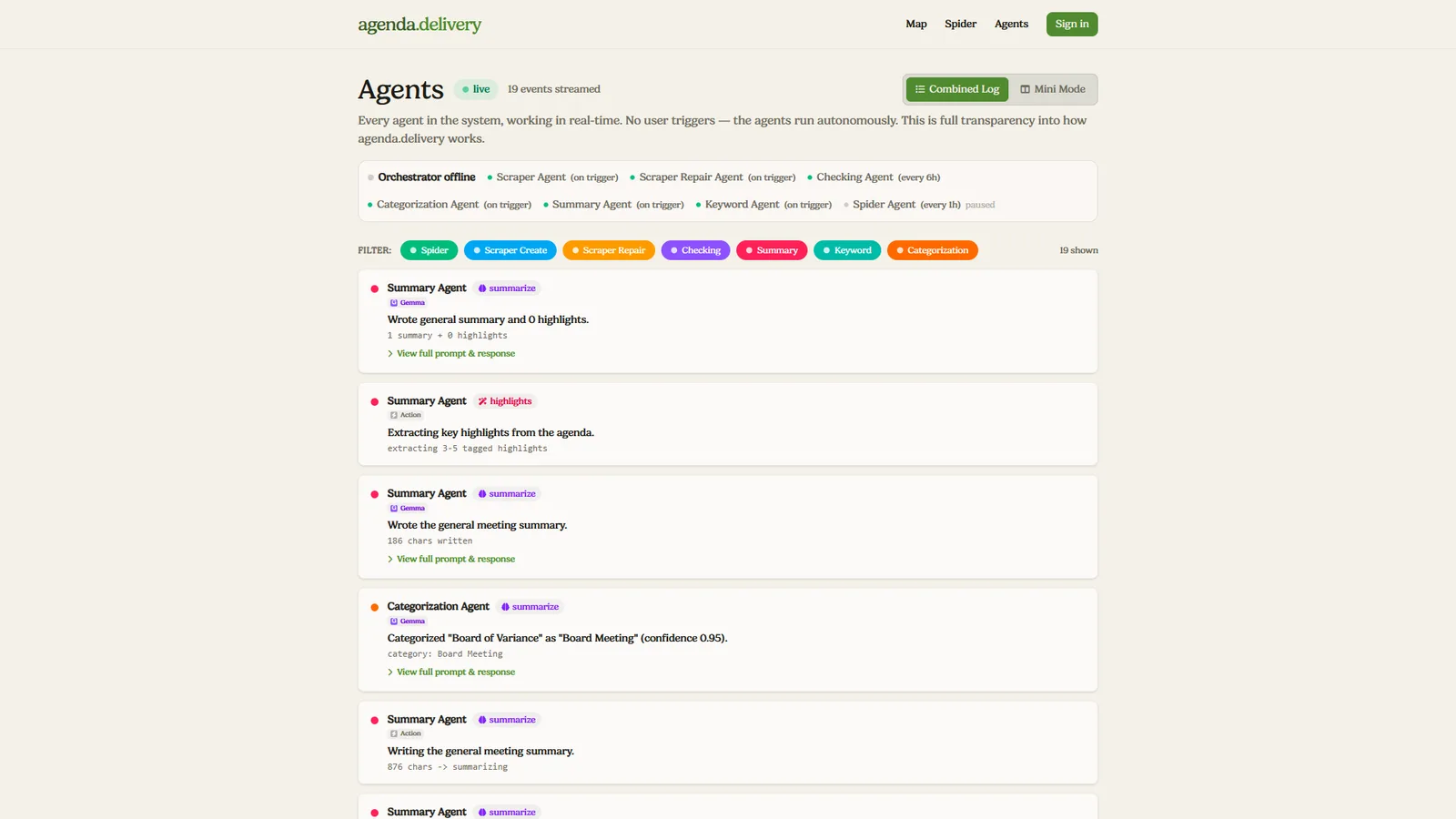
The scrapers are AI agents rather than hand-written parsers. Each one discovers a council, builds its own scraping logic, detects when a site changes or breaks, and repairs itself, with its activity shown live in the interface. This keeps coverage working when municipalities redesign their sites or move their meeting portals.
Built with Next.js, React and TypeScript, backed by PostgreSQL through Drizzle ORM, with Auth.js and Google sign-in for accounts. The agents and summaries run on Ollama cloud models, coordinated by a custom agent framework with a tool registry and server-sent-event streaming for the live activity view. Coverage started with councils in British Columbia.
VeBeGe
 .NET C#OpenCV
VeBeGe is a webcam filter for Windows 10 and 11, which removes intrusion from the background image, primarily people walking or appearing in the background using face detection, but also moving objects using motion tracking.
This concept originated from my experience at Fortinet working with face detection AI algorithms to blur faces on a camera feed, and I wondered if something like this could be useful in other ways, so I started experimenting. Additionally my wife worked in a shared space, with other family members walking behind her, and I wondered if this could be an alternative to just blurring the whole background.
I finished the first iteration, called "JustShowMe," in 2025, and it was exactly that, just blurring everyone's face in the feed except the main user. I picked the project back up again and expanded it to blurring out entire people based on the face. I also changed the model to Yunet's face detection which detects faces from pretty much any angle.
The idea then occurred to me to try and "rewind" the block of video to a time to before the person appeared, which sort of worked, but then I came up with a new simpler idea, what if we keep a cached copy of the background and then we use that to inpaint the person when they appear.
This worked surprisingly well, so much that I realized it could be made click-and-go. Thats when I refactored the project into VeBeGe, just using that virtual background approach, combined with a new motion detection layer which also triggers blurring or inpainting to hide other people in the background.
The result is a webcam privacy filter for the remote-work era. With the processed feed relayed to other applications through a virtual webcam - a virtual webcam is created for each real physical camera.
Built as a Visual Studio 2019 C++ and C# solution, the C++ being used for the virtual webcam driver (based on softcam), and C# using OpenCVSharp and for video processing.
VendorMap
 PHPLaravel
 MySQLJavaScript
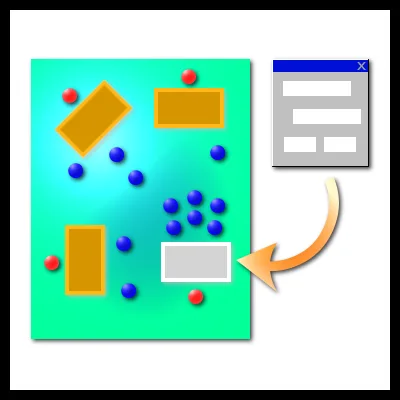
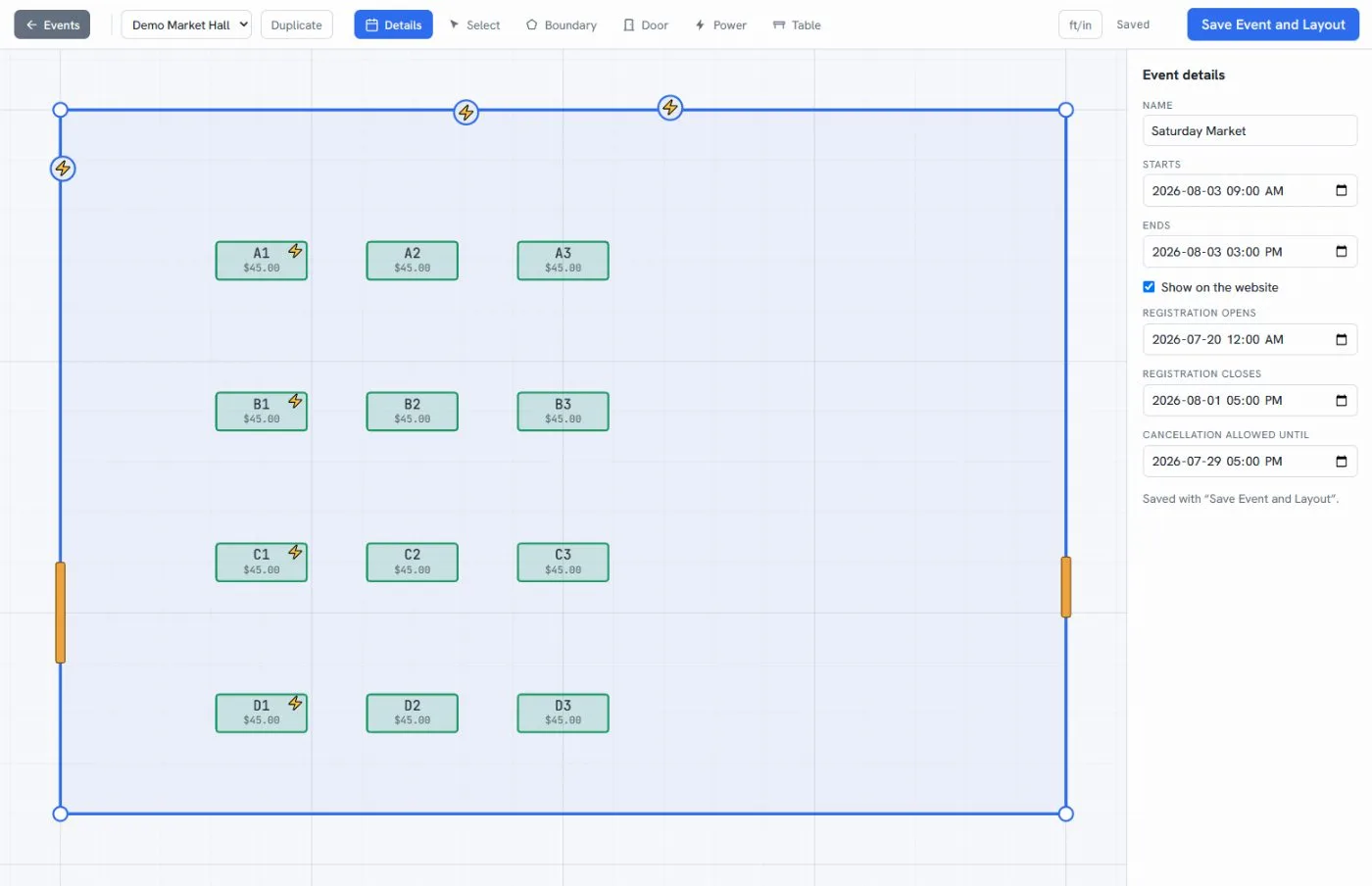
A table-booking platform for public markets and conventions. Vendors browse a live floor plan and click an available table to book it, while hosts design the venue from an admin panel, drawing the boundary, doors, power outlets and tables, then setting each table's size, price, shape and status. Hosts also manage events and approve vendor accounts.
This project was written to support the Parents Advisory Committee at JKE. Every year a Christmas Market organized by the PAC takes place at the School, with all the bookings managed manually. My wife, who serves on the PAC, and I, discussed creating a website where vendors at the market can book to streamline this process. Searching on GitHub, I couldn't find any other projects that offered this, most "table booking" apps are for restaurant reservations, not markets, conventions and so on. This project was started to meet that need.
Since this is hosted on my Ubuntu Linux Webserver, I chose to use PHP as the language behind this project. Instead of unstructured PHP, this project uses the Laravel framework. The Framework offers a number of benefits, namely an MVC (Model-View-Controller) code structure which avoid the trap of scattered disorganized PHP files with a mixture of logic and UI. Laravel also has a lot of third party support with additional libraries that integrate with the framework for easily supporting the features expected.
ShaderPlayer
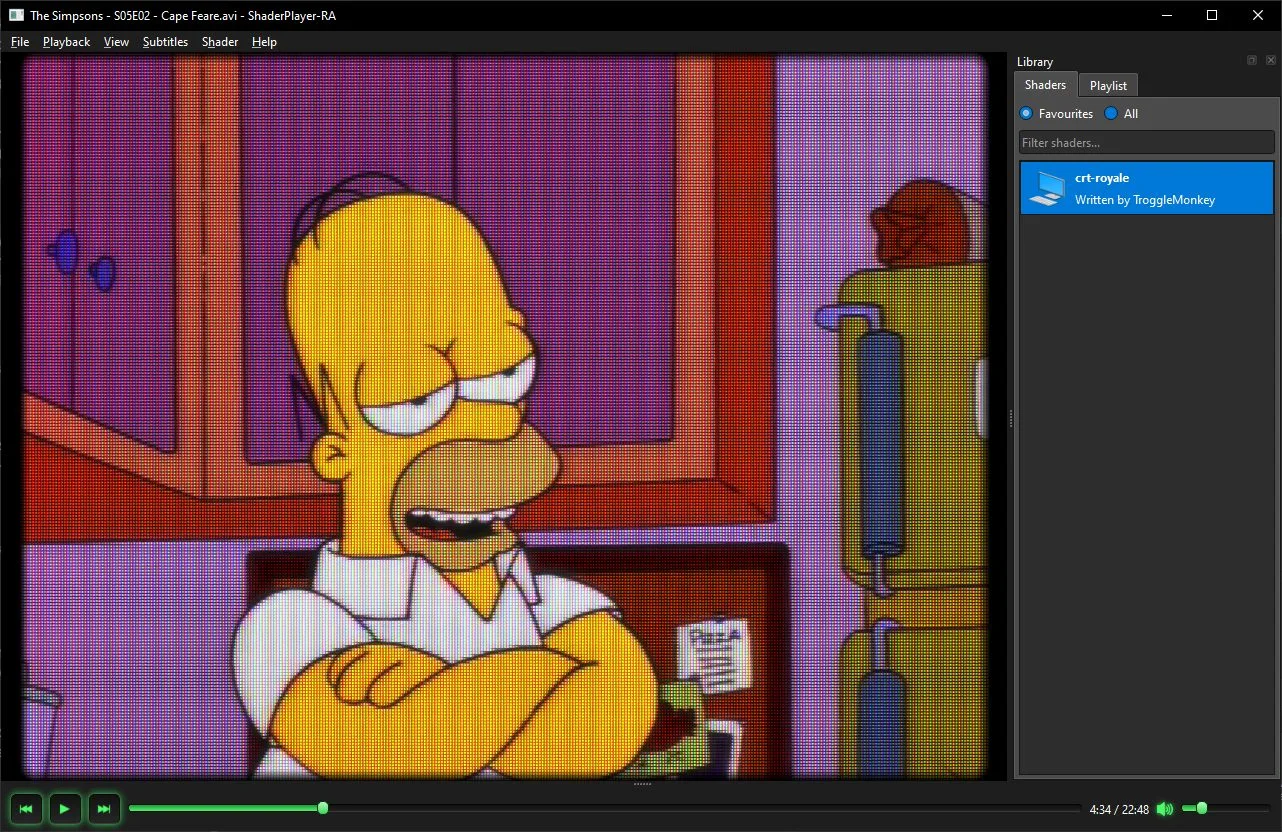
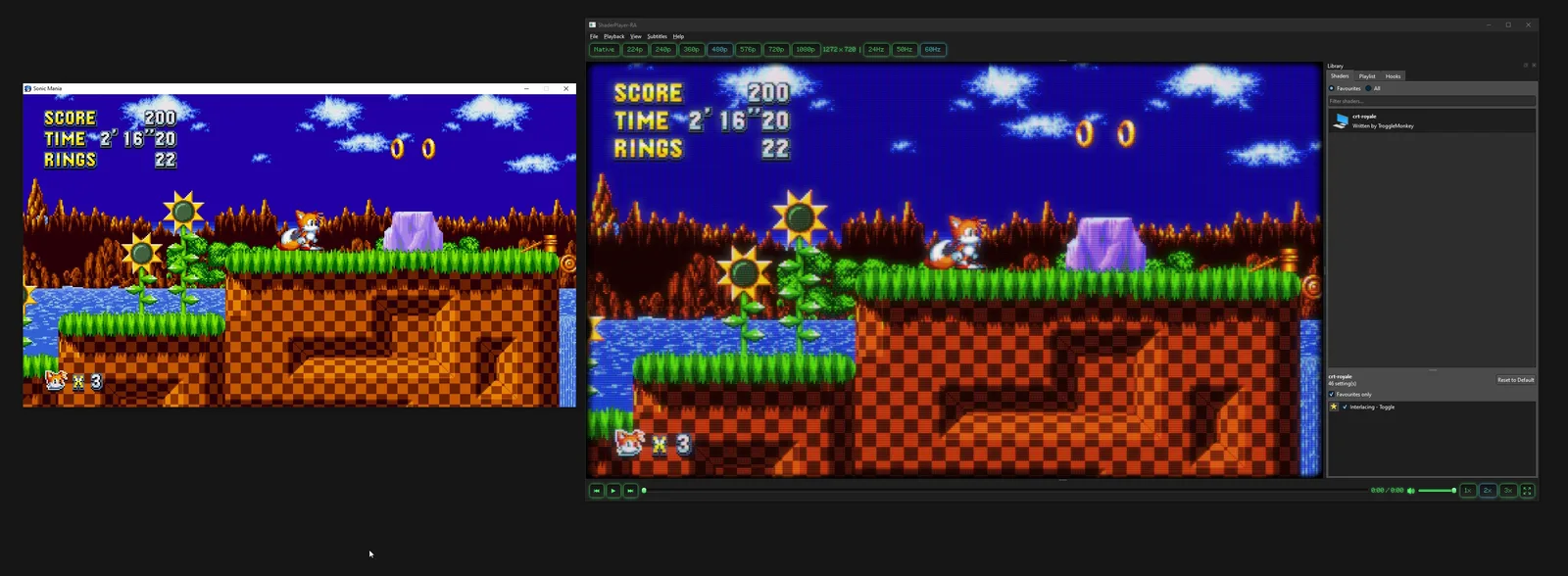
Visual C++A nostalgia-first media player that plays movies, TV and Video Games through a CRT-TV shader.
Ever since seeing the CRT-Royale shader in Retro Arch, I've always wanted to use it on old TV shows and movies, particularly those filmed on tape in the 90s. Something about standard definition content looks so much better on a CRT TV.
The problem - much of this is C++ based and low-level difficult code, working with shaders, OpenGL and so on, so I never was able to commit the time to make it happen. However, in the era of AI-assisted development, I was finally able to create this "dream" app of mine.
This project is still in progress.
 ClaudeGhidraVisual C++Python
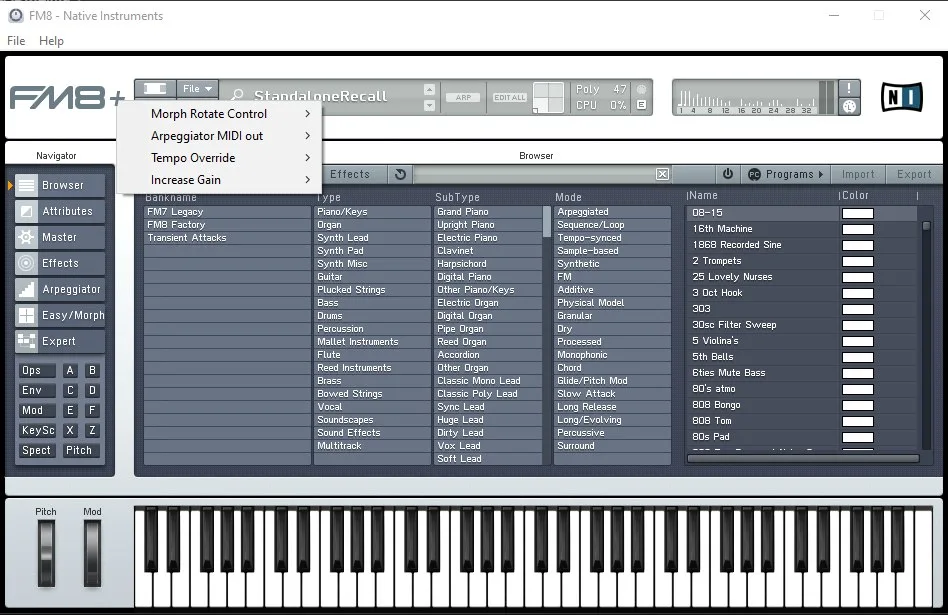
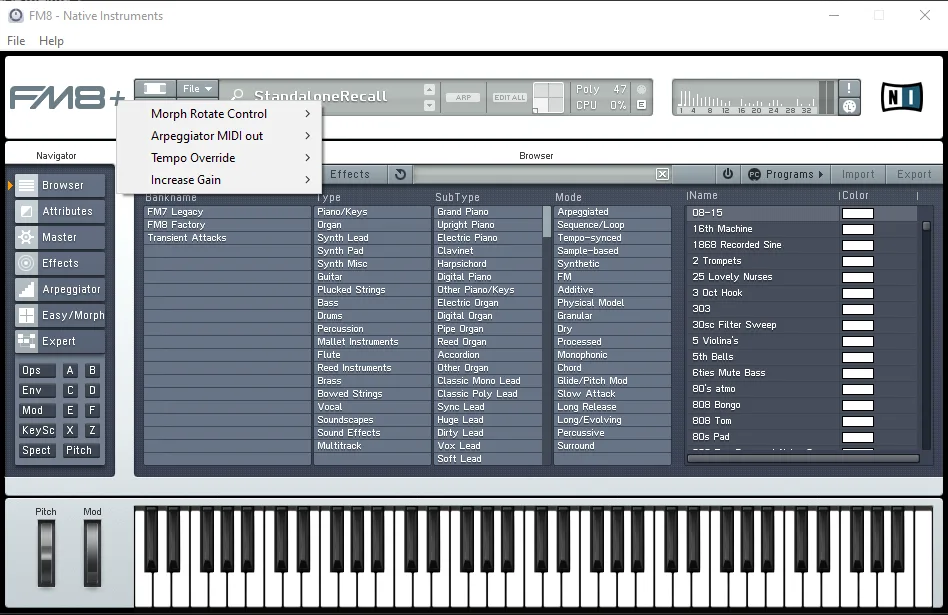
FM8.plus is an enhancement layer for Native Instruments FM8, the FM synthesizer I have used on many of my own tracks at musica.studio. It adds four features the FM8 community has asked for over the years: a Morph Rotate control that maps any MIDI CC to sweep a circle through all four morph timbres, Arpeggiator MIDI out so the built-in arp can drive other instruments, a Tempo Override that unshackles the arp from the DAW tempo, and an Increase Gain option of up to +10 dB. Click the + next to the FM8 logo to open the menu.
The personal story behind this goes back a long way. FM8 has had no meaningful feature updates in years and its final build, v1.4.6, came out in December 2022. Arpeggiator MIDI output is probably its most requested missing feature, appearing on Reddit and forums everywhere, and something I wanted for my own music for a long time. The morph rotate idea was mine: the morph square allows for incredible texture variations and transitions, and I wanted to ride through them with a mod wheel. I asked Native Instruments for exactly that on their old forum in 2013, complete with a diagram. Nothing came of it. Thirteen years later, it felt a little surreal to implement that feature myself and make it real.
What changed is the tooling, and two tools were critical: Claude Fable 5.1 and Ghidra. FM8 is closed source, so the only way to add features is to understand its compiled machine code. Ghidra, the NSA's open-source reverse-engineering suite, disassembles a binary and decompiles it back into C-like pseudocode. That output is enormous, has no variable names or comments, and for a program the size of FM8 it would take a person months to find the handful of functions that matter. This is the barrier that kept ideas like these on forum wishlists for over a decade.
As of 2026, Fable can read that decompiled output at a level close to the original source. I disassembled the standalone FM8.exe, the VST2 FM8.dll and FM8.vst3 with Ghidra, and Fable read the decompiled C function by function to locate the internal machinery each feature had to reach: the arpeggiator dispatch, the MIDI event handler, the internal Morph X/Y setter, and the form resource holding the FM8 logo. It proposed where each hook belonged, adversarially checked its own conclusions, and confirmed the target functions were byte-identical across all three binaries so one set of detours works in every host. From there it wrote the hook code, the per-host proxies and the headless test hosts that verify every feature against the real FM8, and I built and checked all of it with the model in the loop. Frontier models reading disassembly this well opens a new era of user-led enhancement of proprietary software that has stopped being updated.
FM8.plus never modifies FM8 on disk. It installs as its own VST2, VST3 and standalone launcher beside your existing FM8, loads the real plug-in at runtime, and presents itself to the DAW as "FM8+" with its own plug-in IDs, so stock FM8 and FM8+ coexist and a Native Access repair or update cannot break anything. Every hook is guarded by the FM8 build's timestamp; on any mismatch it falls back to plain forwarding rather than risk a crash. The repository contains no Native Instruments code or artwork, and the FM8+ icon is composited on your own machine from your own licensed copy. Released under the GPLv3.
Built in C++ with Visual Studio 2022 and CMake, with Python helpers for Ghidra and the headless VST2 and VST3 test hosts. Currently Windows x64 only, for FM8 v1.4.6. Next up are a GUI scale multiplier and folding these controls into FM8's own interface.
FortiCamera Cloud
 Angular JSTypeScriptPythonFlask
 DockerD3.jsMySQL
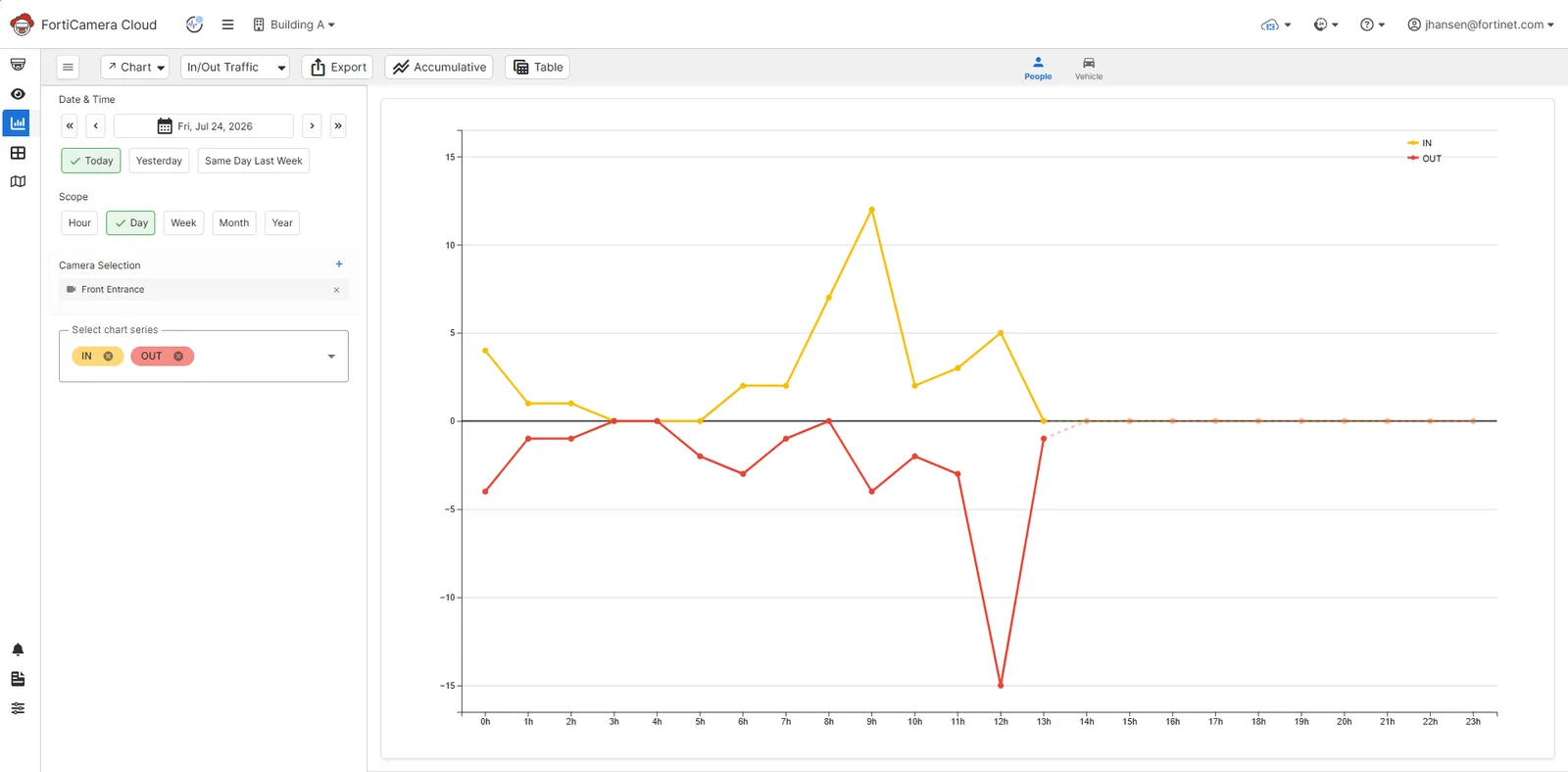
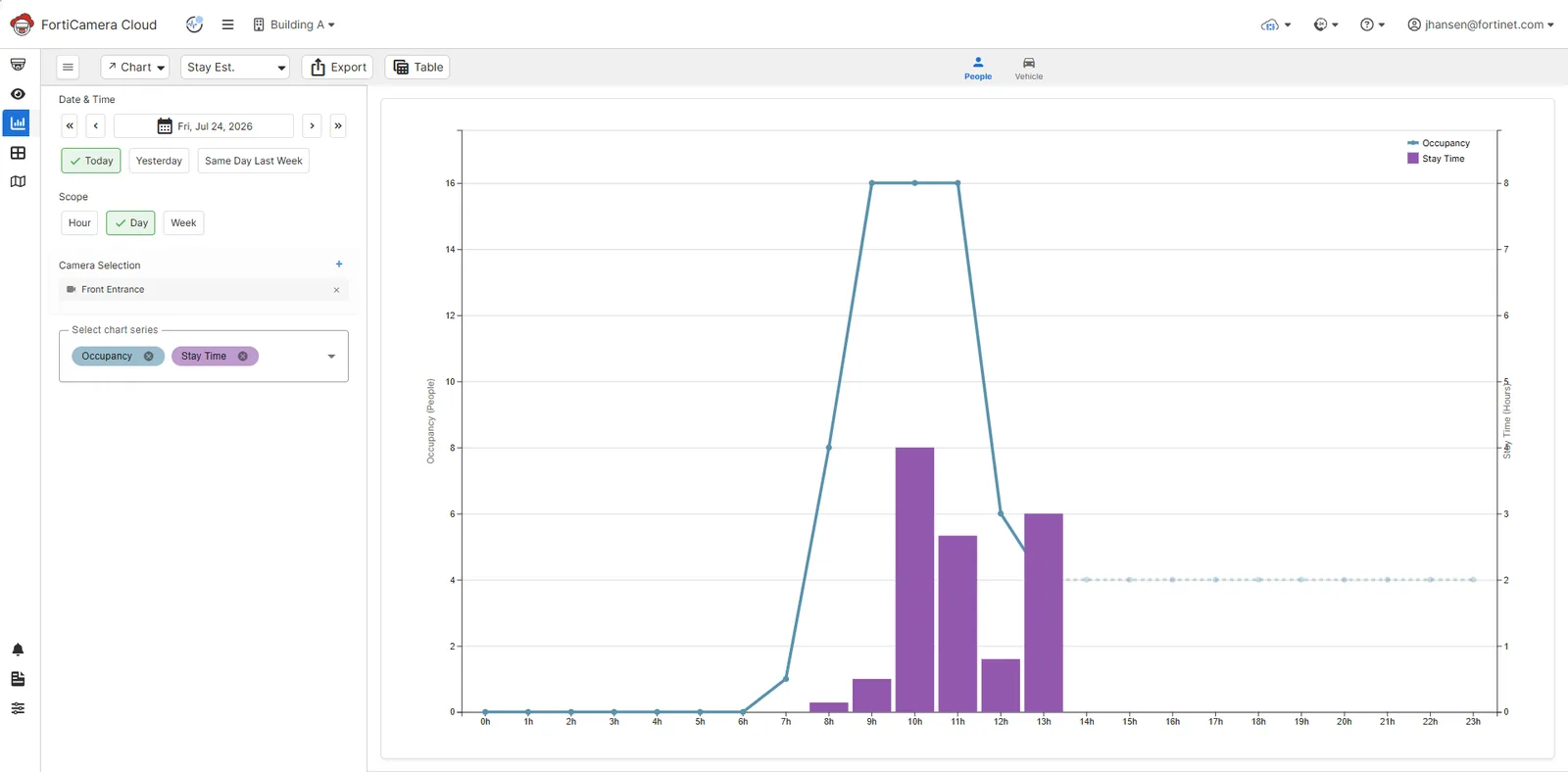
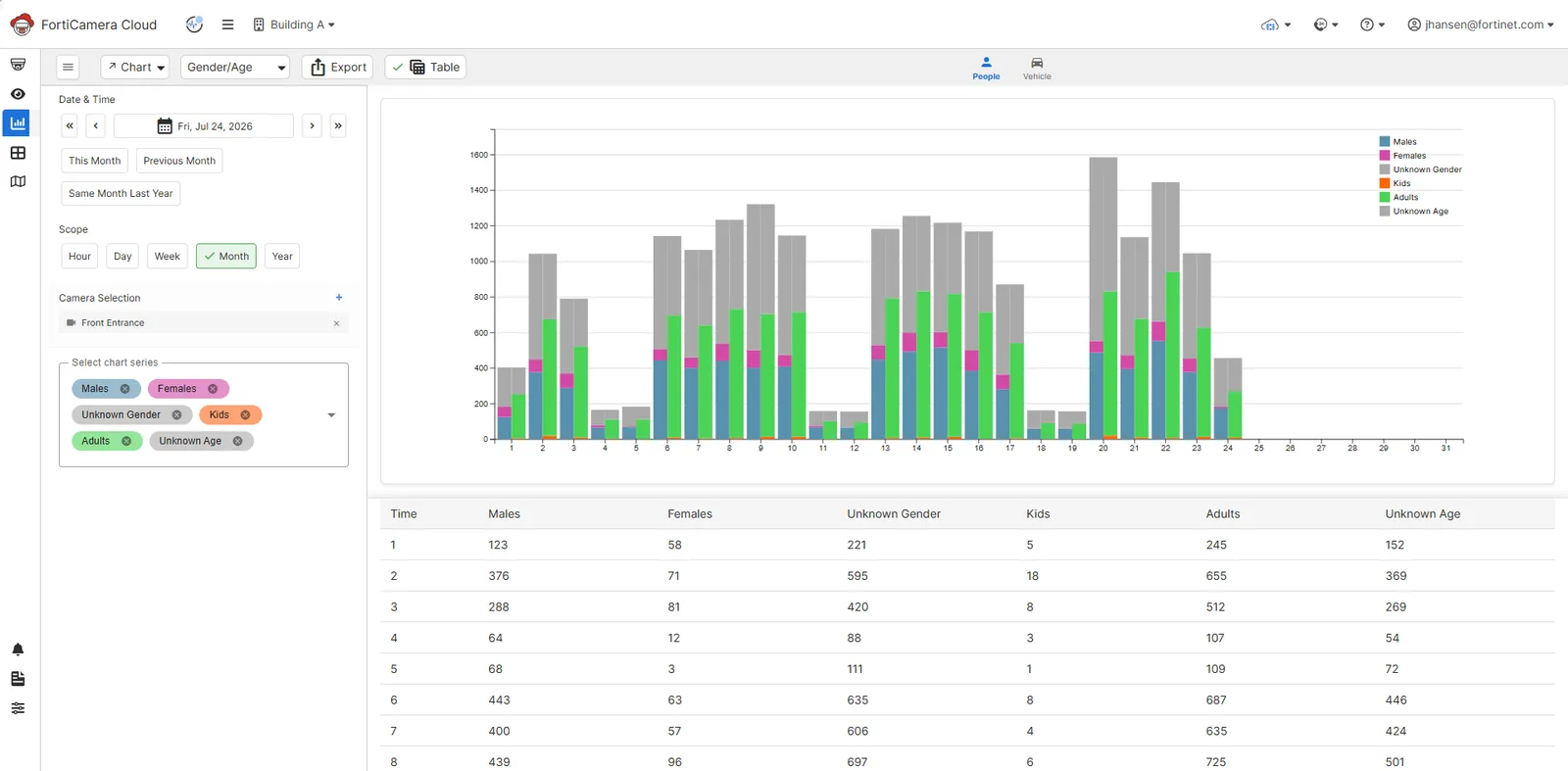
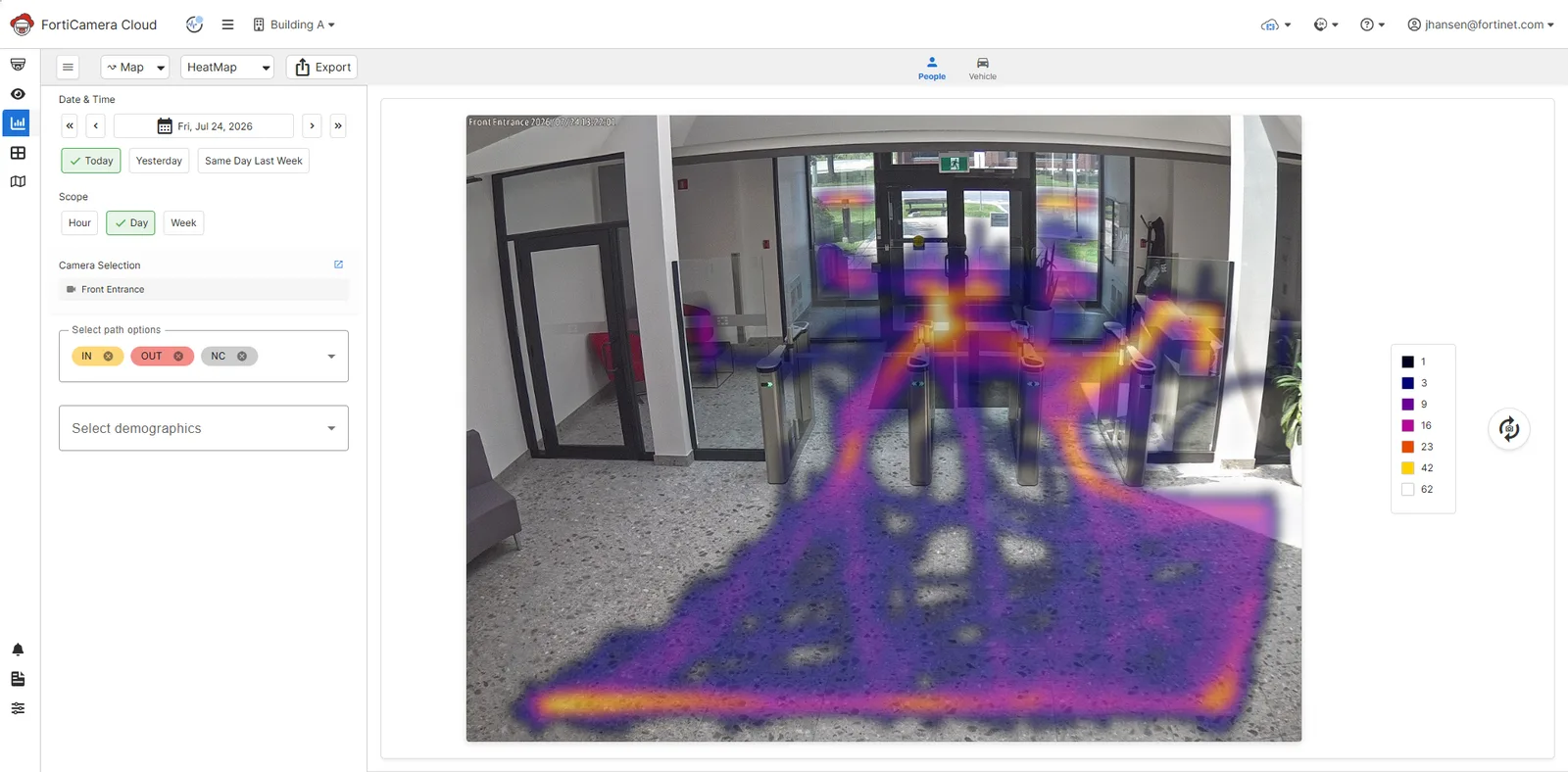
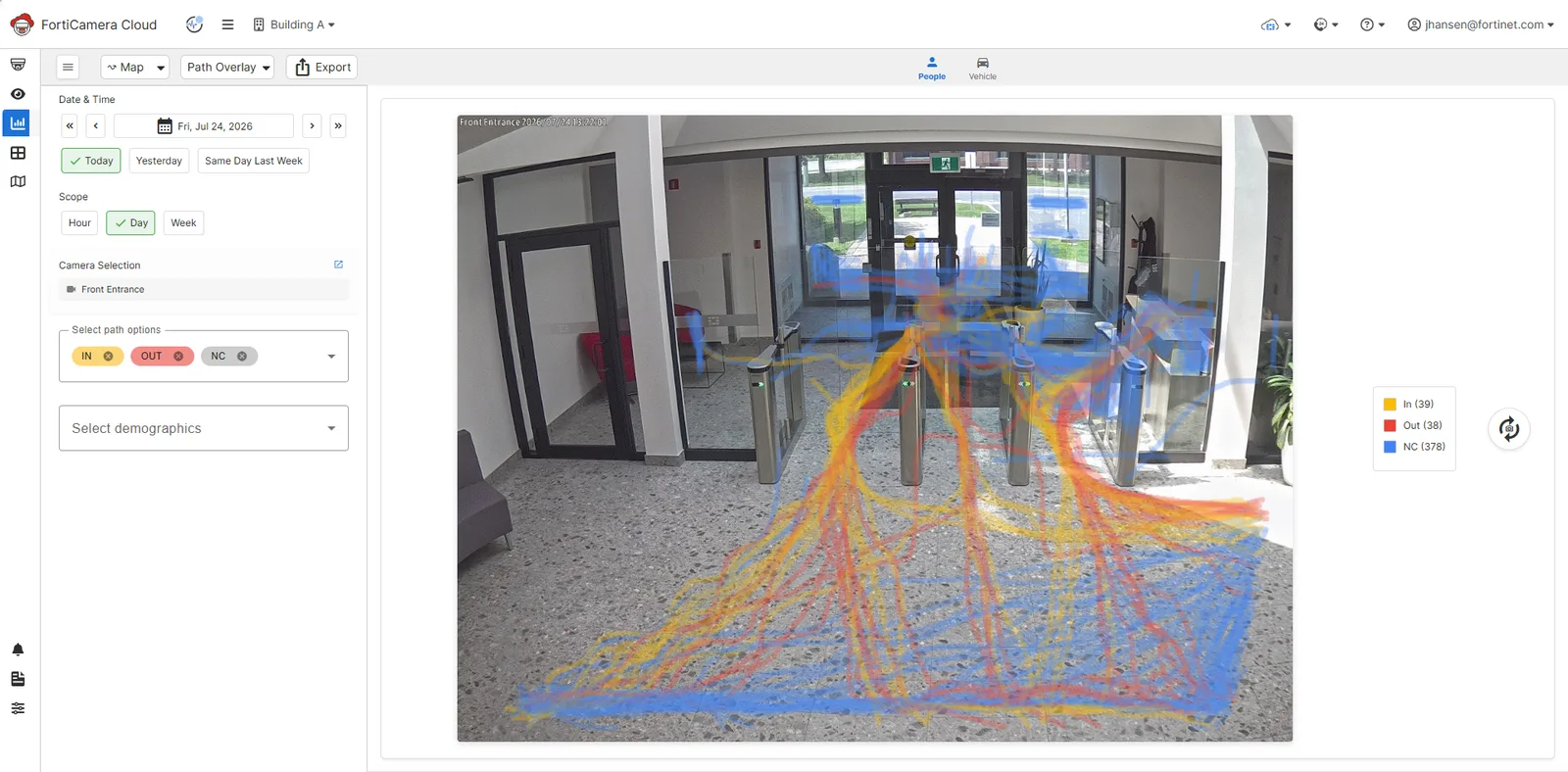
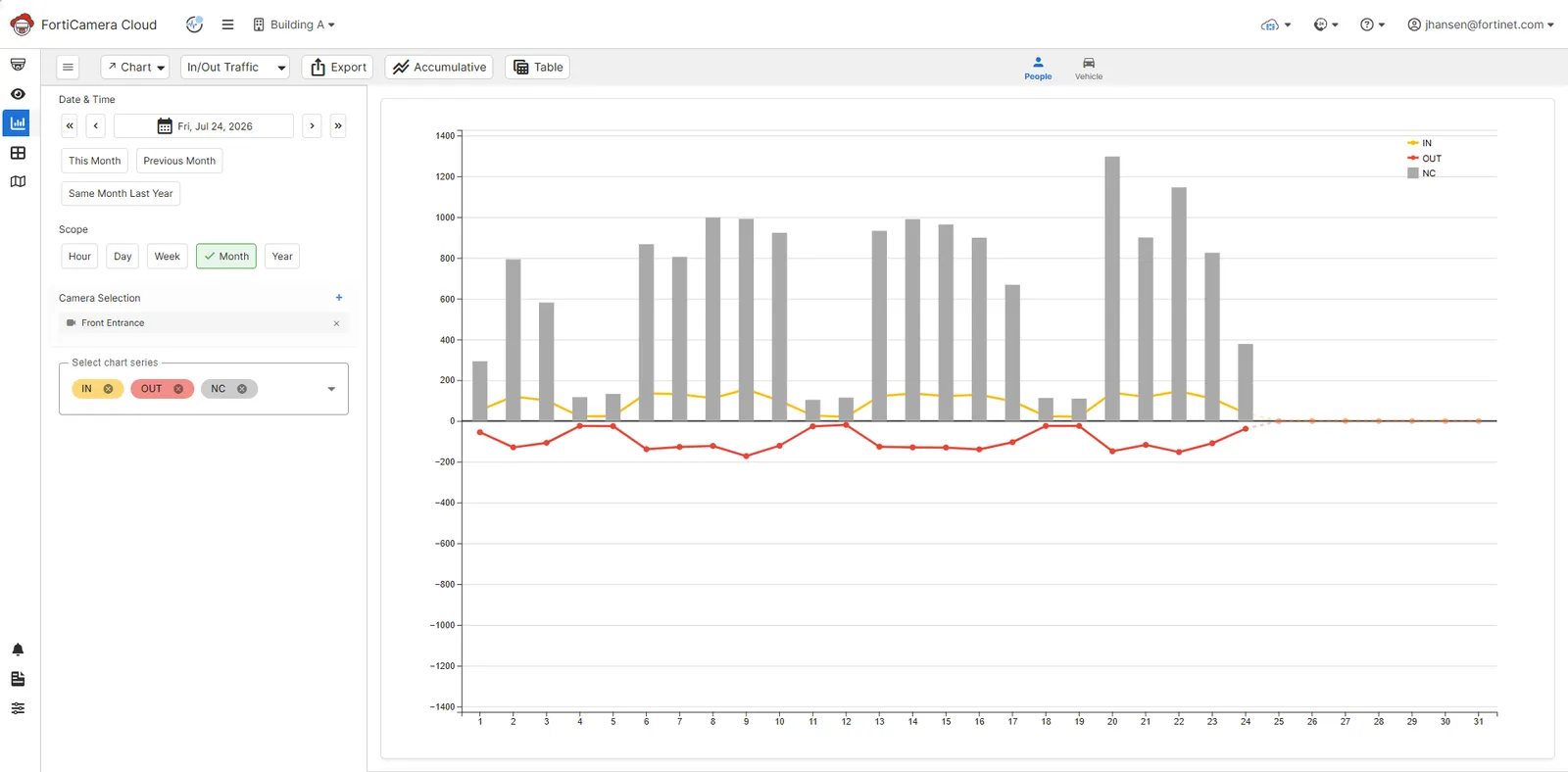
A Docker-based, multi-region cloud platform for security cameras, with a Python/Flask backend and an Angular/TypeScript front end. My main contribution was the analytics charting subsystem: an Angular and D3.js component that visualizes camera analytics, including in/out traffic with an accumulative option, occupancy and stay-time estimation, demographic breakdowns, and heatmap and path overlays, across time scopes from an hour to a year. I modularized it deliberately into separate data-processing, rendering, UI, and API layers.
On the backend a central API relays camera-specific requests to regional gateways, each with its own database, so cameras claimed to different regions keep their data separate, an arrangement that also supports data-residency requirements. The wider platform runs as a set of containerized services coordinated through a message queue and Redis.
Working on this project exposed me to the realities of a large, multi-region microservice system: reasoning across service boundaries, working within a regional data model shaped by data-residency constraints, and integrating with asynchronous workflows built on a message queue, background workers, and Redis. It also gave me exposure to adjacent infrastructure: WebRTC-based live video streaming and OpenSearch-backed event and log search. I became familiar with the entire cloud architecture and approach working on this project.
Consignment Manager
.NET C# WinFormsMySQL
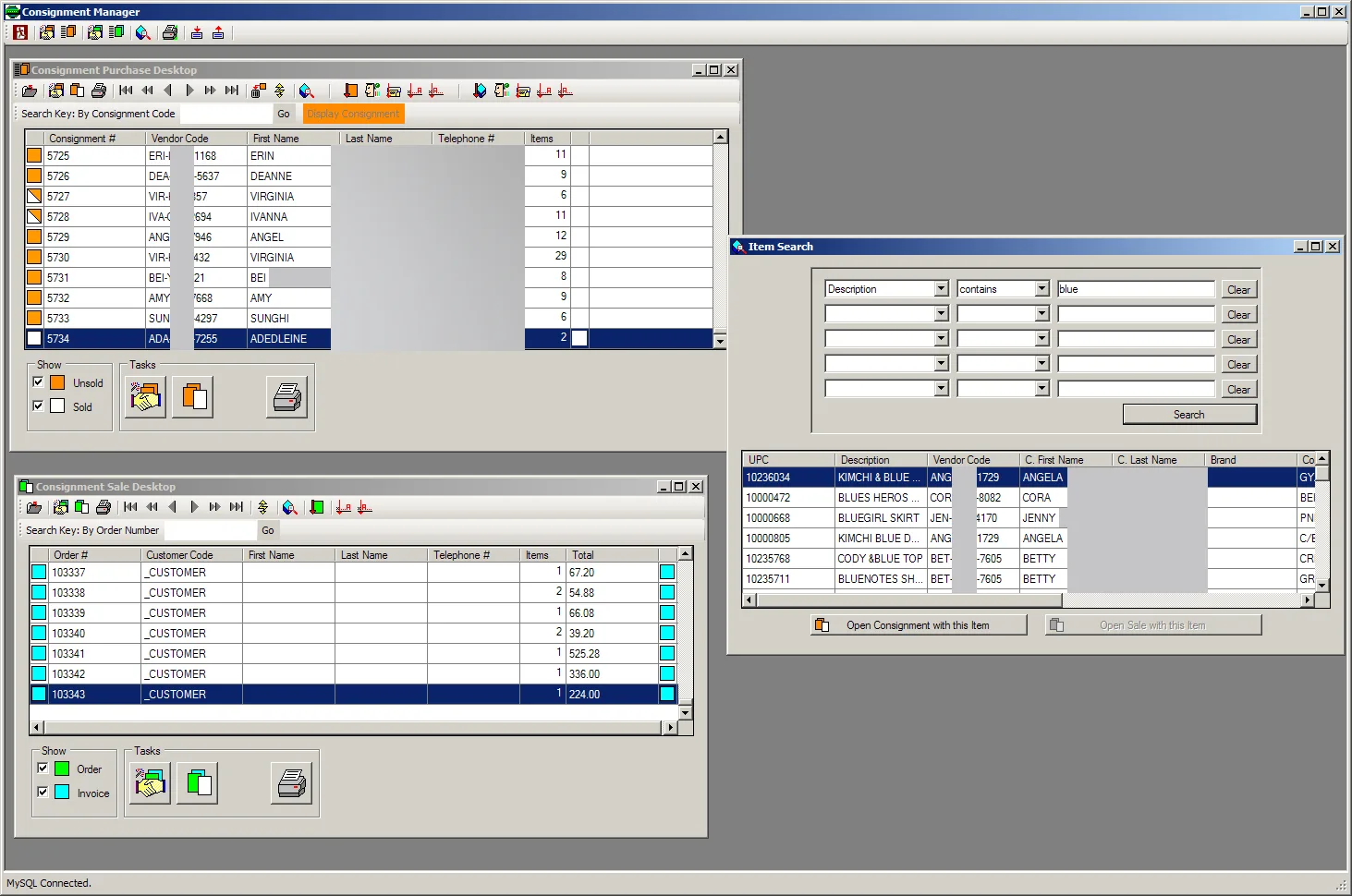
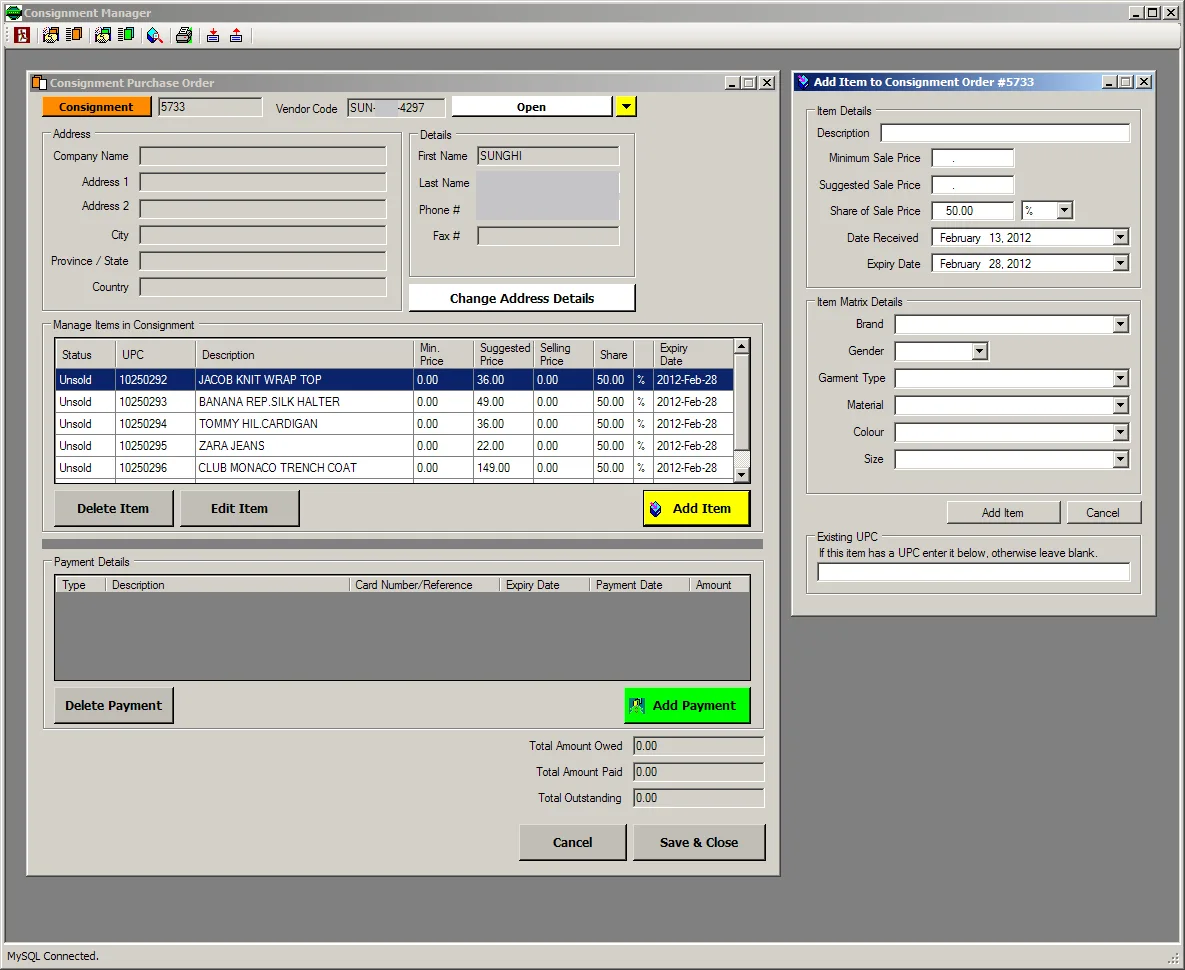
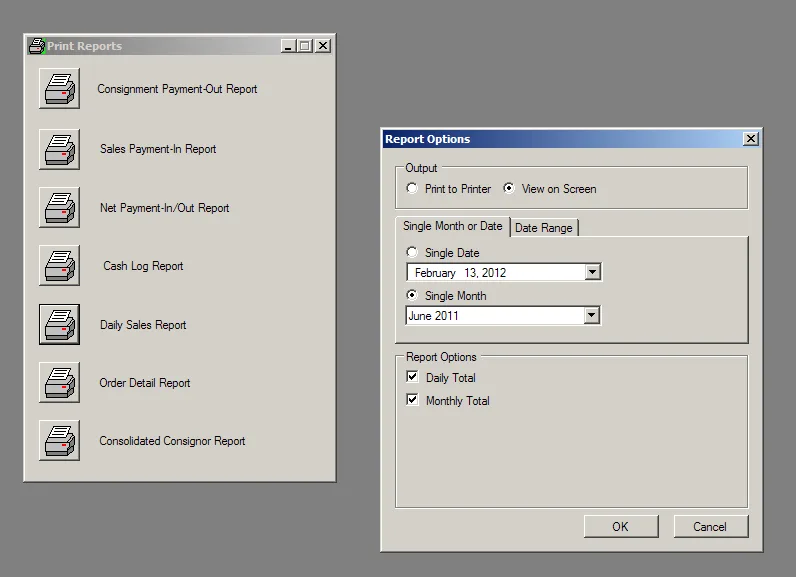
A standalone consignment management application built in C# with a MySQL backend. I was the only developer working on this product at CompuMAX in 2011, following design conventions and icons from the existing Multi Express Business & Accounting product. It manages consignors and their inventory: taking items in through a purchase desktop, selling them through a sale desktop, and searching items across all consignors, with a Consignment Manager tying the workflow together.
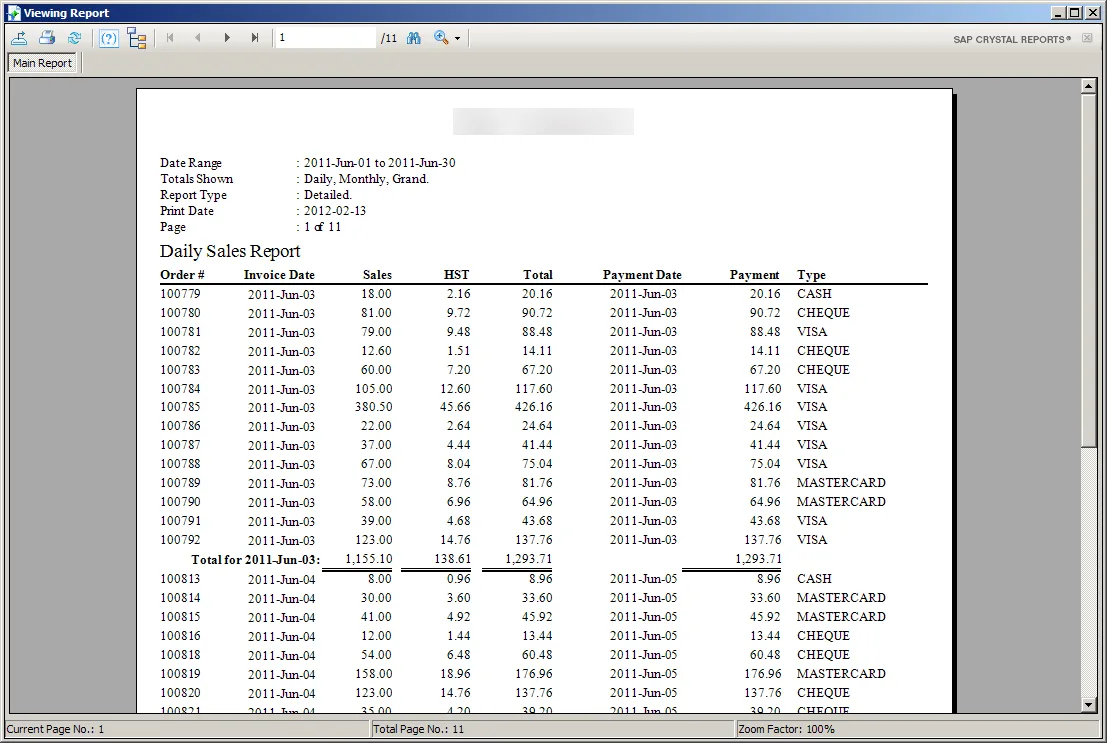
I also built the daily sales reporting, with printable reports generated through SAP Crystal Reports.
The project took 6-12 months to complete from start to the first version beginning in January 2011, the first release to the customer in August 2011, followed by updates through to December 2011.
Although this was a commercial product, Ken Tung of CompuMAX gave permission in June 2026 for the source code and project to be shared under the GPL.
CheerCompGenie
.NET C#Angular JSJavaScript SQL Server
A web-based platform for running cheer and dance competitions, covering event setup, team and athlete registration, scheduling and scoring. As tech lead I led the technical decisions on architecture, platform selection, and task delegation across the team, and built the real-time interactive scoring interface in Angular.
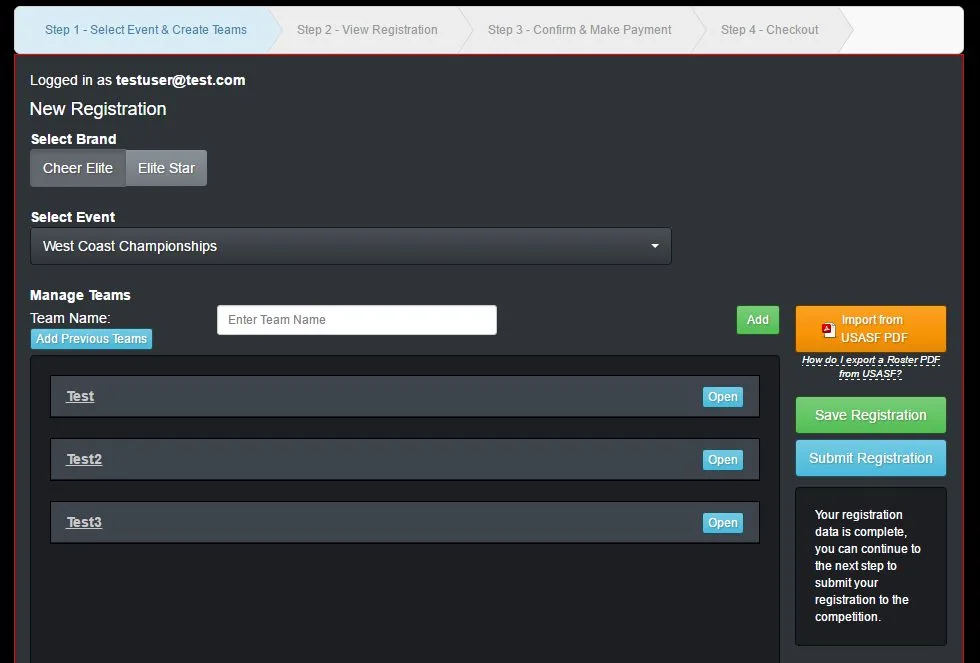
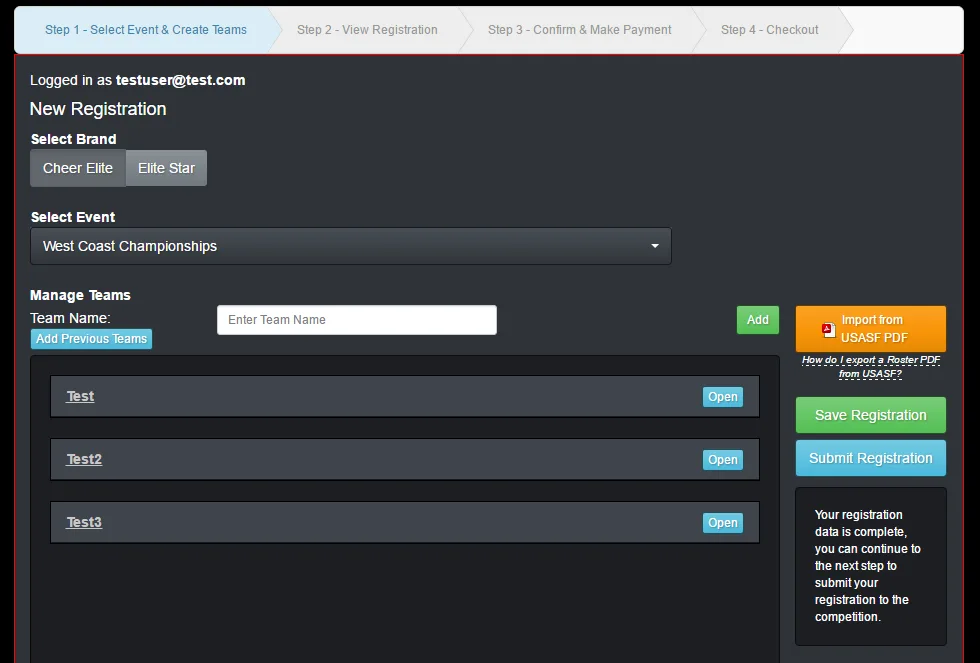
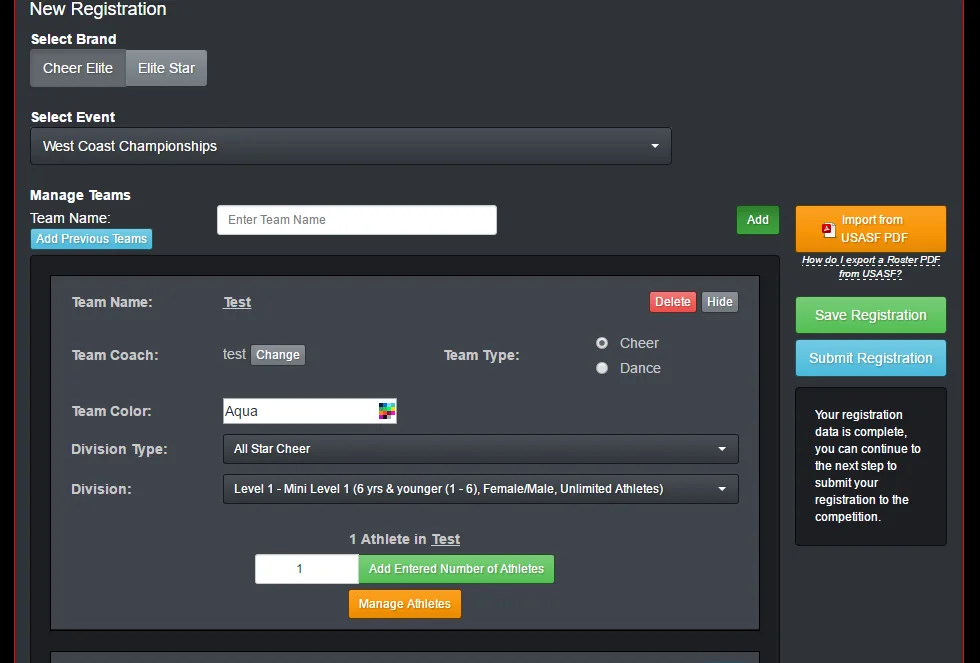
The registration system was a particular focus. I took the CEO's initial specification, reworked it into a clearer Angular concept, and delivered it as a multi-step flow: select event and create teams, manage athletes, confirm, then pay and checkout, with bulk team and athlete import from Excel and USASF roster files. It was released commercially under the DanceComp Genie / Cheer Competition System brand.
FortiCentral
.NET C#WPF (.NET)A commercial Windows desktop application, built in C# and WPF, for centrally managing Fortinet's FortiCamera and FortiRecorder hardware. Over several years I built and maintained major parts of the client, including a configurable dashboard widget engine, an import/export wizard for syncing people and watch lists between devices, a theming engine with a visual theme editor.
I also spent considerable time working on the FortiCentral Video Analytics modules written in C++ with OpenCV, reorganizing the code to create separate Object Detection and Face Detection, and completing the Privacy module to apply blur to detected faces.
I built the current user interface for the 3D map editor: a view where operators drag and drop elements, scale them, adjust them through draggable property controls, and build walls, doorways and windows to model a site in three dimensions. I later extended it to support physical access-control hardware such as card readers, with the Event Manager surfacing those events live from the system's API.
Security and data integrity ran through the work. I added SSL certificate-change detection that warns operators when a managed device's certificate changes, protecting customers from potential man-in-the-middle attacks.
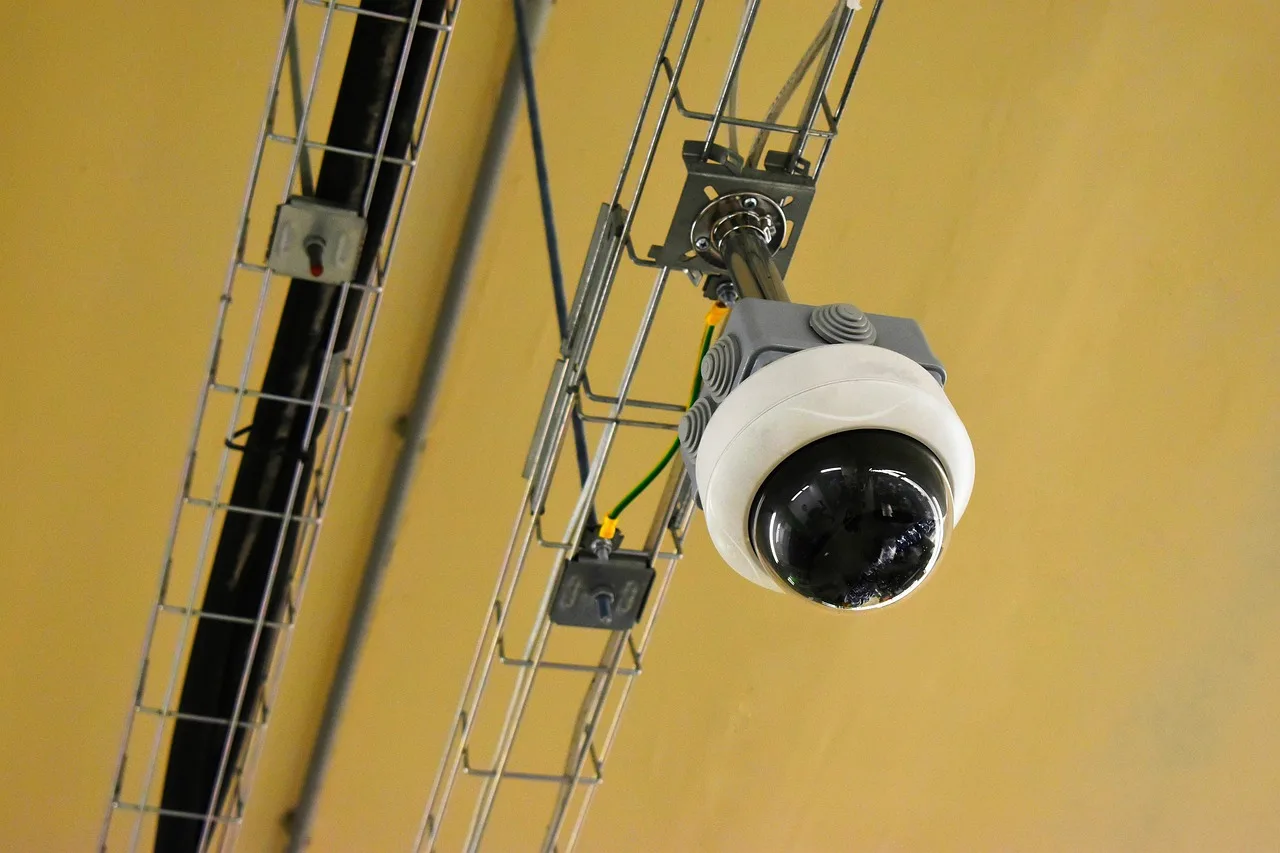
FortiCentral talks to the FortiCamera devices themselves, which run a small C-based daemon on-device that handles the connection back to the client. I also spent time in that camera-side C source, so my work here spanned both the C# and WPF desktop client and the embedded C it communicates with.
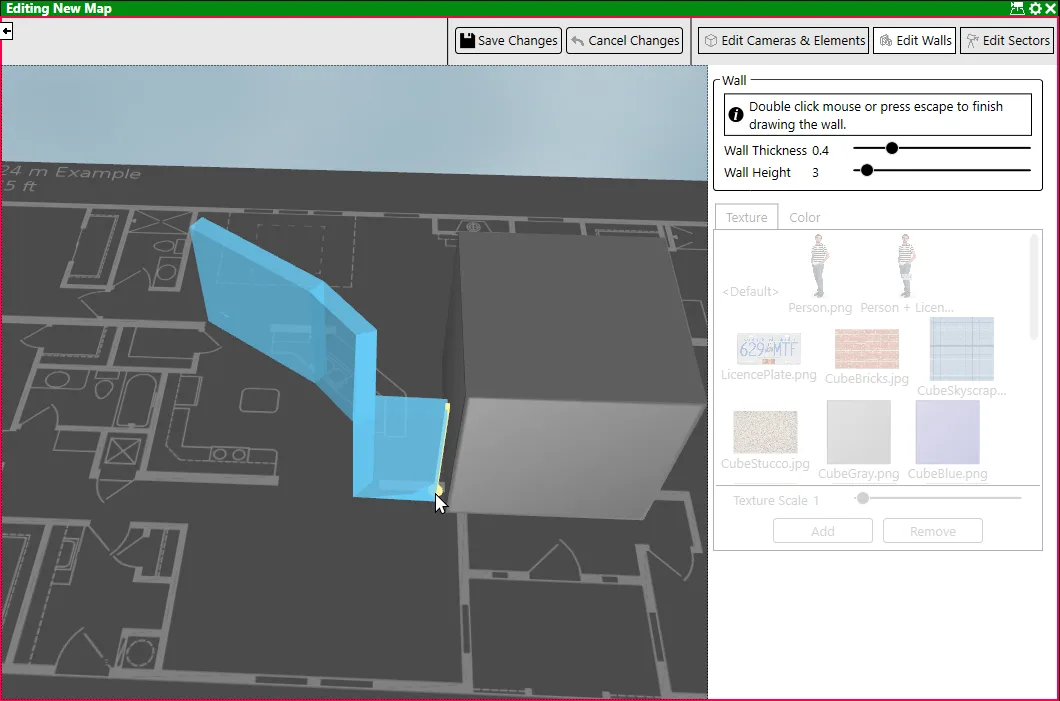
Try it yourself: the 3D map editor
The 3D map editor is part of FortiCentral, a free download. To open it and start building:
- On the Fortinet downloads page, open the FortiRecorder tab, download FortiCentral, then install and run it.
- Log in with the default account: username admin, no password.
- Click the gear icon in the top-right and choose Settings.
- In Settings, select 3D Maps, type a map name, click New, then OK.
- Open 3D Maps in the left bar and drag your new map onto an empty pane.
- Click the gear again and choose Enable Edit Mode.
- Hold the right mouse button and drag to orbit the camera. Drag elements in from the bottom panel to place and modify them, and click Edit Walls to draw and edit walls.
Grocy Voice Agent
PHPJavaScriptSQLiteElevenLabsA voice-controlled front end for Grocy, the self-hosted grocery and household manager, built for a kitchen tablet. You press start and talk to it: an ElevenLabs agent listens, adds and consumes stock, and reads results back, so managing the pantry never means typing on a greasy screen.
The ElevenAgent system provides the framework, providing API hooks which synchronize with the user interface. For example a user can press "scan receipt" or tell the agent they want to scan a receipt.
Still in development for a public release, but in use in my home right now for our household groceries. This project was made after my wife and I discussed how we can better track what groceries we have in the house, but needed something very easy to use. We already use Google Keep with our Google Home for adding items to shopping lists, this was built on the idea of taking that concept further.
LunchMoney Balance Notifier
PHPLunchMoney implements the Plaid System which allows them to connect their service to credit cards and bank accounts to automatically import transactions.
The idea was that this utility would then watch my credit-card balances through the Lunch Money API and send a push notification of how much remaining budget is available.
Unfortunately Plaid connections often disconnect without warning, making this method unreliable long term.
Work History

Fortinet

Inchol Solutions

“James is a dedicated, experienced, software professional with vast experience in all aspects of software engineering. He is friendly and kind to anyone in the group which makes him a great team leader. I learned a lot of things from James. Definitely would want to work with him again! Highly Recommended.”

“James is very passionate and has great vision for his work. His focus keeps everything moving smoothly, he makes sure all the deadlines are met, and working with him in the same Project as a QA, am sure that whatever project he is working on meets the highest standards.”
“I found James to be creative in terms of software development. He can see the whole picture, understand interrelation of system components and make decisions based on every detail. James is also an independent and customer focused strategist. He always comes up with long term solutions for small problems to avoid any repetitious reworking.”

Zoombucks

CompuMAX Systems Corporation
Skills
Current Technical Skills
TypeScript
Typed JavaScript across large front-end and full-stack applications, keeping components, state, and API integration maintainable as a codebase grows.
Strong typing with interfaces and generics to catch errors at compile time and keep refactors safe.
Python
Data analysis, automation, and backend services using Pandas, NumPy, and Flask.
Strong data-structures and algorithms foundation: hash maps, sets, heaps (heapq), stacks, linked lists and 2D grids; two-pointer, sliding-window, greedy and hashing techniques.
Comfortable designing custom data structures from scratch (O(1) min-stack, randomized set, hash set with collision buckets) with attention to time/space complexity and edge cases.
Backend Systems, Docker & Cloud
Design and development of containerized microservice architectures with Docker and docker-compose, fronted by a reverse proxy, using Python web frameworks (Flask and Django) served under gunicorn.
Integration across service boundaries and async workflows: Redis caching, Celery background workers and scheduled jobs, and OpenSearch for search and log analytics, including hardening service-to-service permission checks and building REST APIs that span multiple services.
Real-time media infrastructure, including WebRTC video streaming with a RabbitMQ/STOMP signaling layer and TURN relays for NAT traversal.
Visual C# .NET
Commercial .NET applications and DLLs, spanning standalone WinForms and WPF desktop apps to .NET MVC web platforms.
Object-oriented design with classes, interfaces and inheritance; data querying and transformation with LINQ.
Database modelling and data access with Entity Framework; dependency injection with Microsoft Unity.
C & C++
Native C and C++ development, including camera-side firmware and daemons.
Video capture and computer-vision modules built with OpenCV.
PHP & Javascript
Commercial websites and web applications with PHP and Laravel: server-side application logic, routing, and database-backed features.
Front-end interactivity with JavaScript, jQuery, and Node.js.
Angular
Single-page applications in Angular and TypeScript, including data-heavy dashboards and charting and visualization UIs.
Component-based architecture with reactive data flows, API integration, and attention to performance in large views.
Relational Databases (MySQL & SQL Server)
Data modelling and schema design across MySQL, Microsoft SQL Server and PostgreSQL, hand-written SQL and T-SQL scripts, and ORM-based access with Entity Framework (.NET), SQLAlchemy (Python) and Drizzle (TypeScript).
Managed schema evolution in production through versioned Alembic migrations, and designed a database, caching layer, and API for an access-control system.
Built analytics queries over large metadata datasets, with attention to indexing and query performance.
AI & Automation
AI-Assisted Development
Daily use of coding agents with Local/Cloud LLMs to speed delivery, with review and oversight, so I spend more time on architecture and less on boilerplate.
Collaborative AI Agent Environments
Setting up a single agent environment that more than one developer directs, rather than each person running their own assistant. On FSVR that is Hermes Agent running Claude in a container holding both repositories, the Ghidra database and the capture tooling, taking instructions from a shared Discord channel so my collaborator and I work through the same agent from different countries.
Local & Cloud LLMs
Language models set up for AI workflows, including the model behind the "Ask AI" feature on this site and the Ollama cloud models running the agents and summaries in Agenda.Delivery.
AI Workflows & Agents
Custom autonomous agent frameworks with a tool registry and streamed activity, including the self-healing scraper agents behind Agenda.Delivery that discover councils, build their own scraping logic, and repair themselves when sites change.
Automated document and transcript summaries with Ollama Cloud and Whisper, and voice agents wired to real systems.
Computer Vision (OpenCV)
Object and face detection video-processing modules built with OpenCV and detection models, including a privacy filter that blurs and erases detected people.
Analytical Skills
Data Analysis
Statistical methods, regression, survey design, and descriptive analytics.
Data Engineering & Visualization
Reproducible analysis pipelines, dashboard development, and geospatial analysis.
Program Evaluation
Theory of change, logic models, indicator development, and formative and summative evaluation.
Qualitative Research
Interview design, thematic analysis, and mixed-methods integration.
Public Finance & Microeconomics
Applied to municipal and policy contexts.
Technical & Analytical Writing
Policy briefs, evaluation reports, and stakeholder communication.
Legacy Skills

Borland/Codegear Delphi
Developed own project and limited commercial programs in Delphi.

GrafX Visual Objects
Maintained and ported functions from legacy commercial applications written in GrafX Visual Objects, which uses similar syntax to Delphi.

Scripting
Familiar with various scripting languages including BASH scripting on Linux, and LUA and PAWN game scripting languages.
Community
Volunteer civic-technology and open-data work in Langley, BC.

Strong Towns Langley
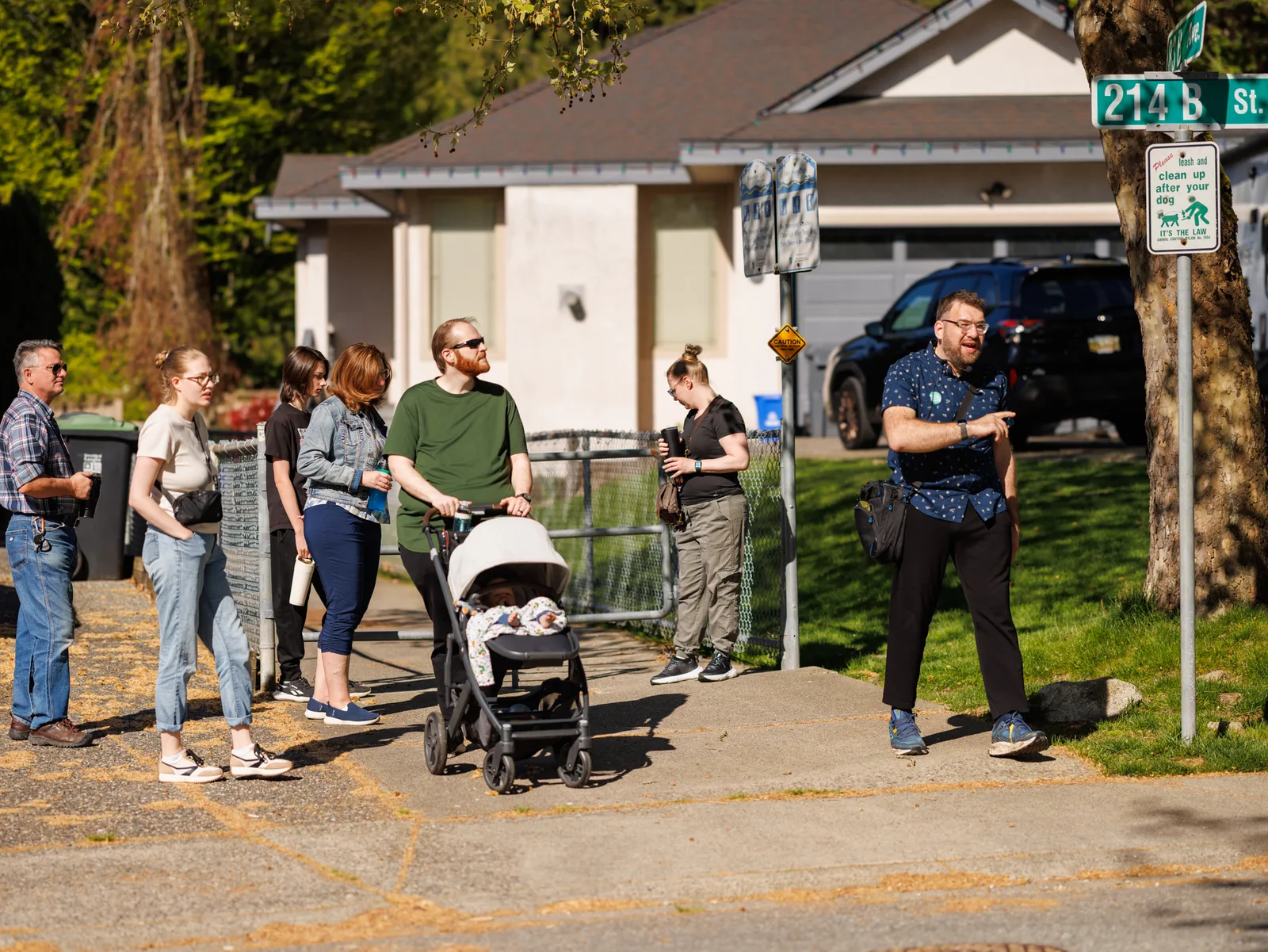
Giving back to my community matters to me. Outside of work I founded and direct Strong Towns Langley, a registered British Columbia non-profit and part of the Strong Towns movement, where I build civic-technology tools that make public information open and accessible, the same open-knowledge spirit I value in software. I lead the technical side: the website, email newsletters, automation scripts, and analytical tools.
I also lead the annual Jane's Walk in Langley, a free community walking tour exploring how our neighbourhoods work and how they could work better.
This runs alongside my engineering career rather than apart from it. The projects are a chance to keep practising my craft on real-world problems, particularly data analysis and visualization, in service of my own community.

Todd
Todd is Strong Towns Langley's AI assistant, and it takes on most of the society's admin so the directors can spend their time on the actual work. It drafts our agendas, notices and minutes, keeps track of the deadlines in our bylaws and the Societies Act, keeps the member list up to date from Zeffy, does the books from the bank statements and prepares the financial statements, the annual report and the tax return for a director to review.
It also answers the public email, prepares social media posts for approval and sends every member their own AGM notice, then sits in the Zoom meeting as "Todd" with no camera or microphone to count attendance and votes. Todd isn't a director or an officer and has no vote, it can't move money or make payments, nothing is filed or paid without a director's approval, and only directors can give it instructions. Ask it and it will tell you plainly that it's an AI.
Todd runs on a custom harness that uses Claude Code running Claude Opus 5.5, chosen due to the high importance of accuracy for these tasks.
Strong Towns Community Developers & Designers

STCD

Pracre
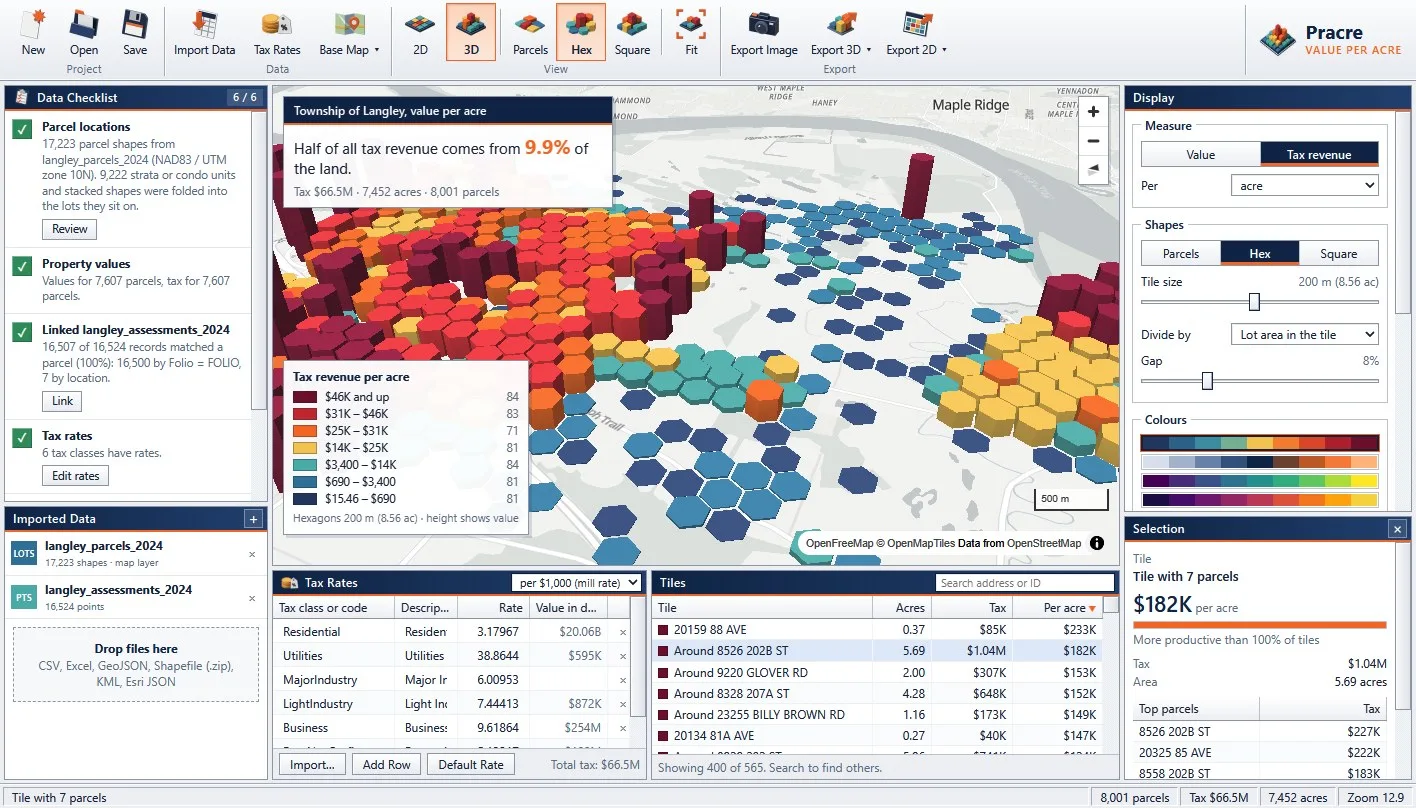
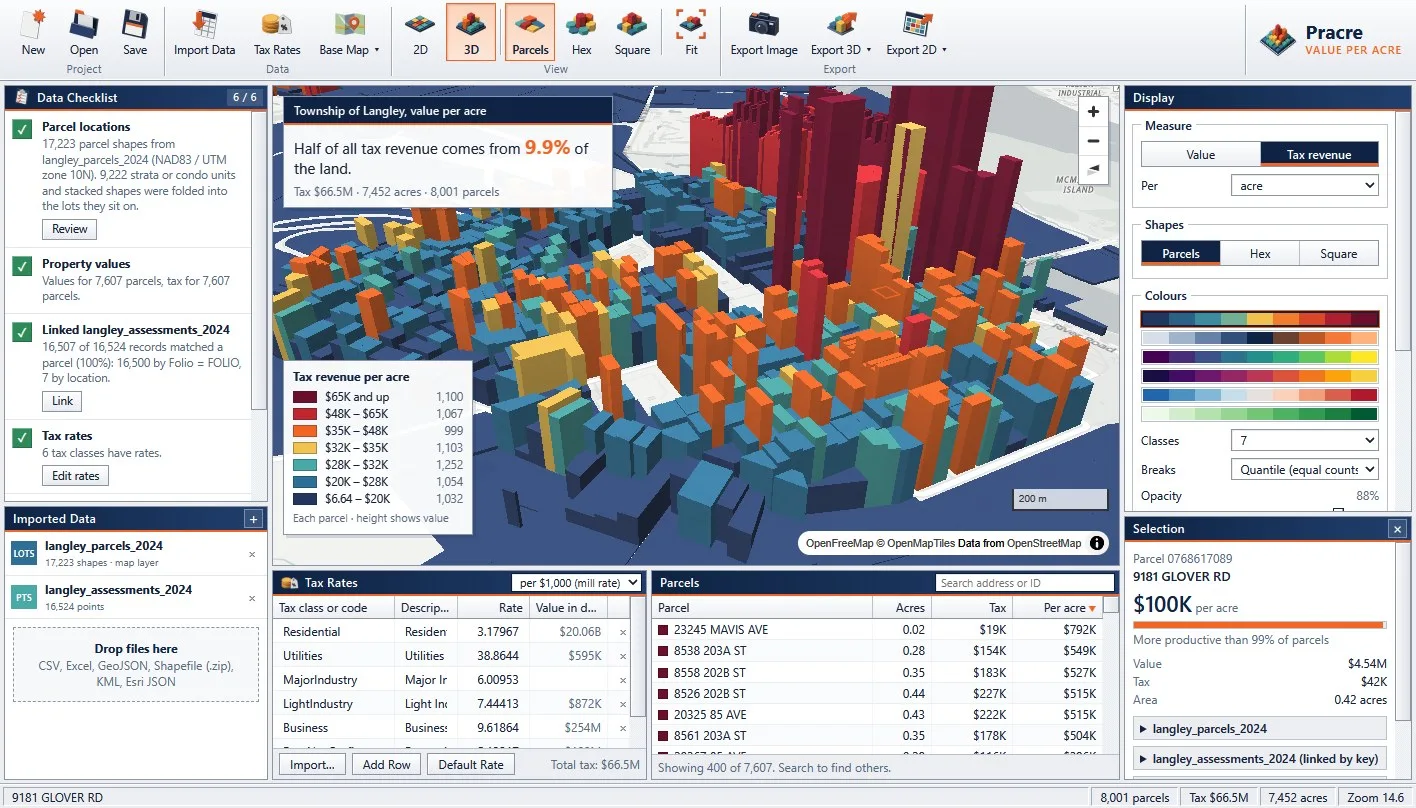
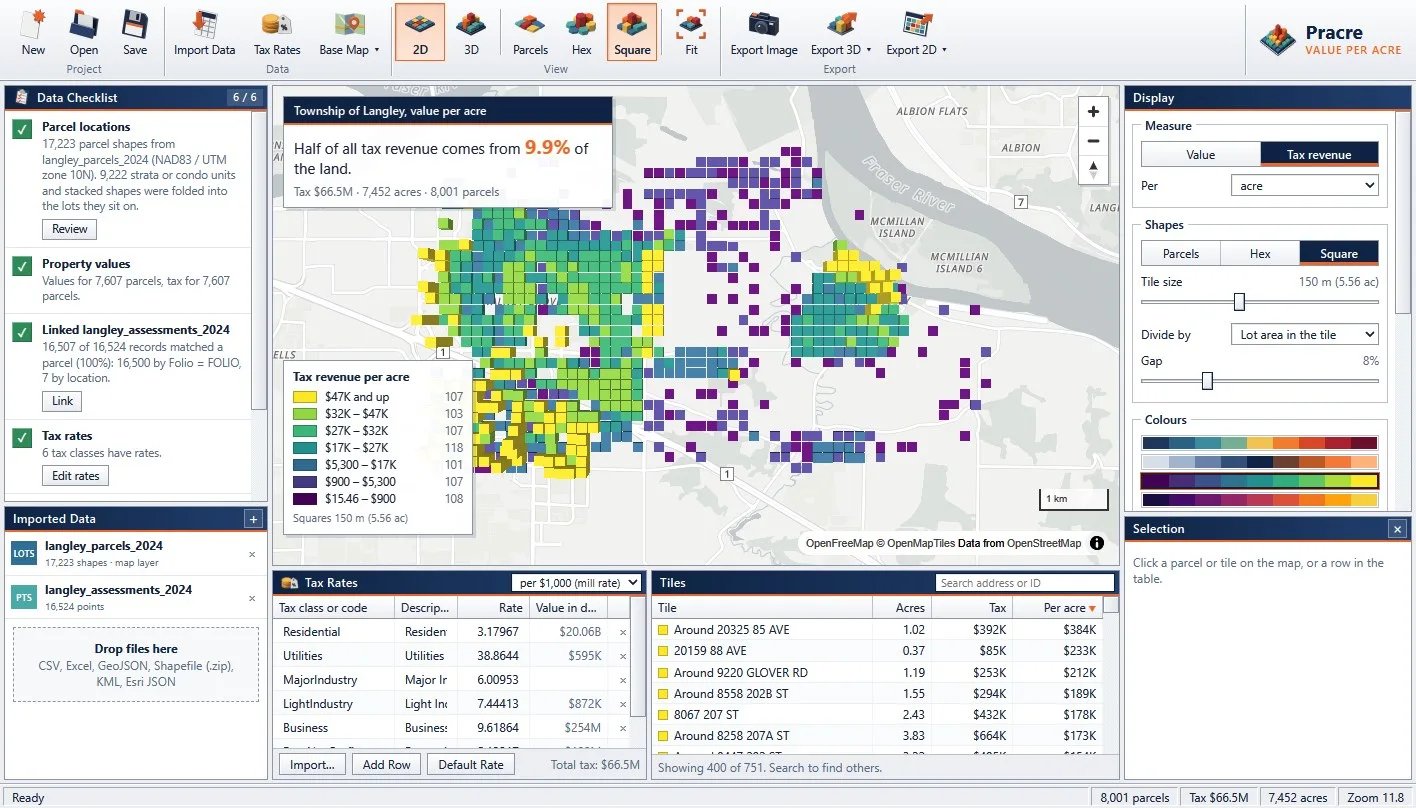
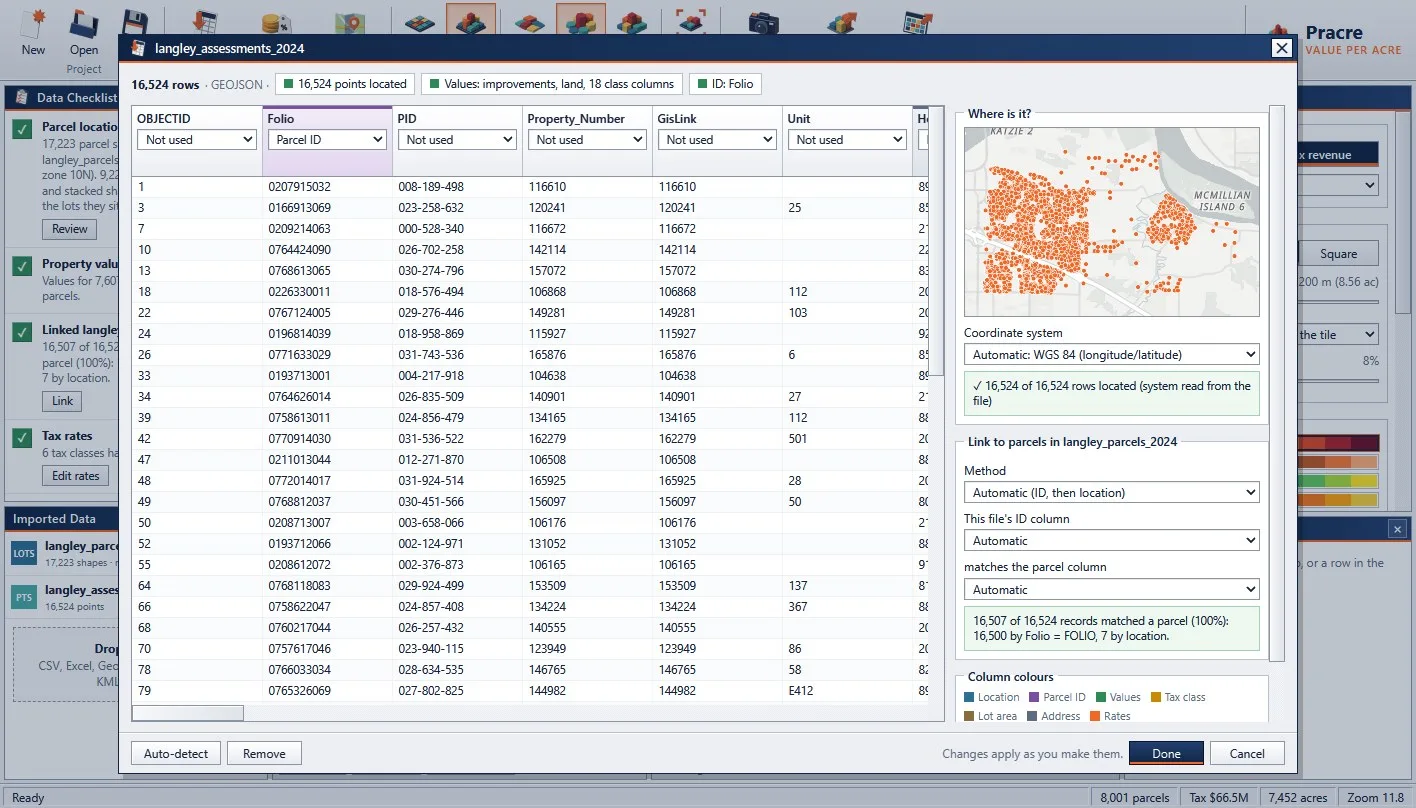
See more projects at STCD.
Strong Towns Langley Projects
Council Meeting Summaries
The Telraam Traffic Counter
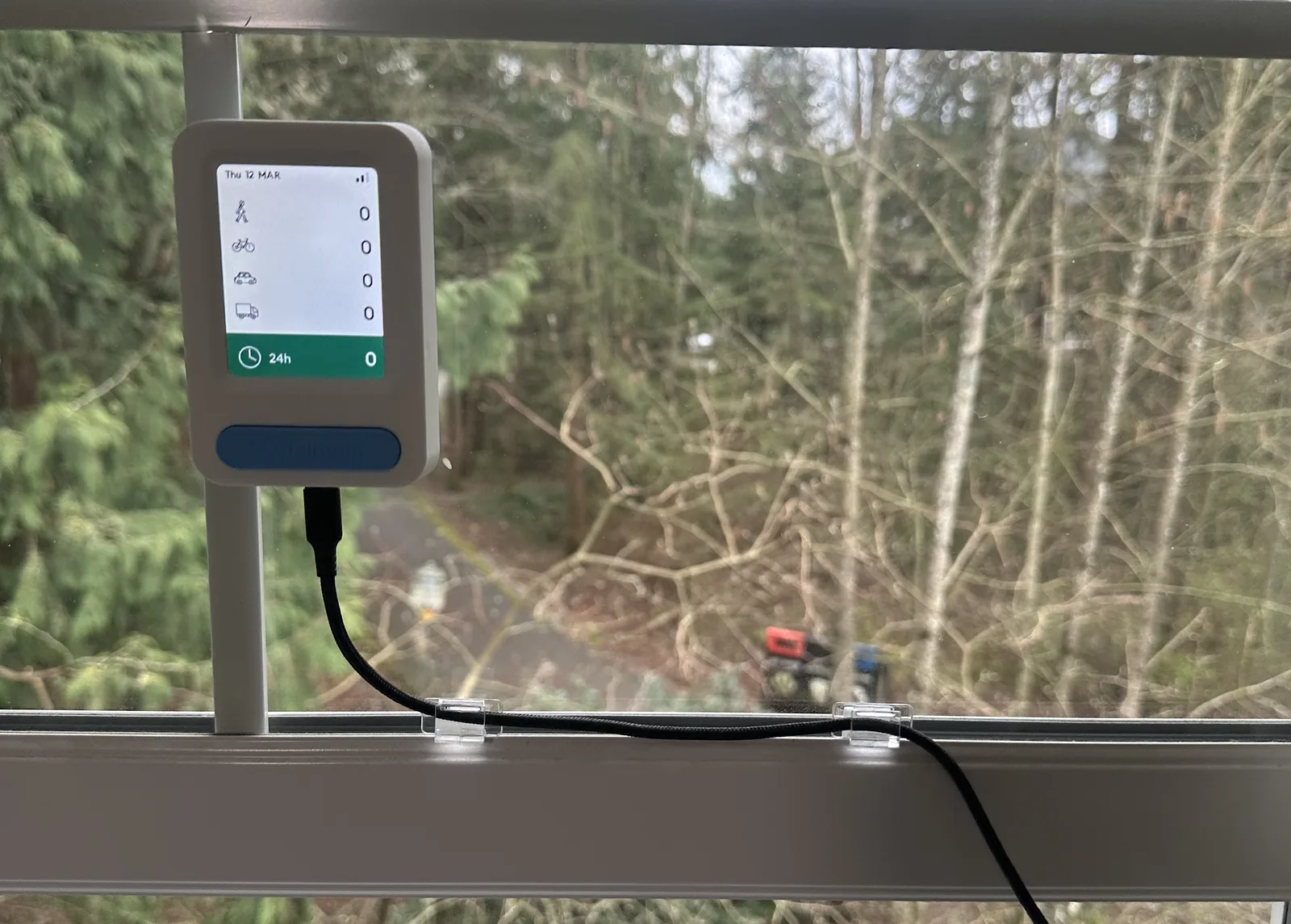
One project I am especially fond of is a Telraam traffic counter: a small device that mounts inside a window and automatically counts the pedestrians, cyclists, cars, and larger vehicles passing by, publishing the totals as open data anyone can view.
It began with a simple question, whether removing the gates on a local trail would change how many people walked and cycled there. Counting by hand was not practical, so we ran a fundraiser, the community covered the cost within a day, and after some door-knocking a resident with a clear view offered to host it. It now runs from a weatherproof box beside the trail, the first Telraam installed in British Columbia, with live counts anyone can follow over time.
Policy
I completed an MA in Public Policy online between April 2025 and April 2026, studying alongside full-time work at Fortinet. I took it because I was genuinely curious about how effective policies, both governmental and within companies, can be formulated, bridging the gap between my political interests in the community and my career.
I completed twelve modules:
- Theories of Public Policy
- Program Design and Evaluation
- Statistical Methods and Data Analysis
- Qualitative Analysis and Survey Design
- Microeconomics
- Macroeconomics
- Public Finance
- Law, Governance and Public Policy
- Democratic Governance and Policymaking
- Complexity and Public Policy
- International Organizations and Policy Regimes
- Urbanization and Development
Auditing, visibility, observability, governance - these terms are used in Enterprise level Software Engineering, but directly parallel theories and frameworks in Public Policy.
Many developers have ran into concepts like Complexity Theory, which applies to policy and systems architecture, particularly with systems at scale. A good example I have ran into is a bug only appeared when hundreds of recorders were connected to the desktop app, and identifying the cause across hundreds of lines of logging and code was a huge challenge.
Developers can follow best practices for complex systems - a targeted approach, making small changes while making observations. Scholars like Jane Jacobs referenced this when it came to city planning and the same applies to development.
The logical framework used in Program Design is a matrix of goals, outcomes, outputs and activities, and for each one an indicator, a means of verification, and the assumptions and risks it depends on. No objective is allowed to exist without a stated way of knowing whether it was met.
The course also focused on theory of change and theory of action. Theory of change states what you believe will happen and why: if we do this, then that follows, leading to this outcome, because of these assumptions. A theory of action is the delivery model that carries it out. This is a toolkit in development process.
The statistics and qualitative methods modules covered the evidence underneath all of that: sampling, significance, regression, coding interview data, and how to write a survey question that does not lead the respondent. Most of it applies directly to reading telemetry and running user research without manufacturing the result you expected.
The thread through all of it is that a system is not only its code. Good systems and good public policy are both centred around people, human nature, and what works effectively.
Education
Jindal School of Public Policy
Kingston University
Gloucester College of Arts and Technology
Weston College
Broadoak Community School
Contact & Bio
Get In Touch
Send me a message and I will get back to you. You can also find me on GitHub and LinkedIn.
About Me
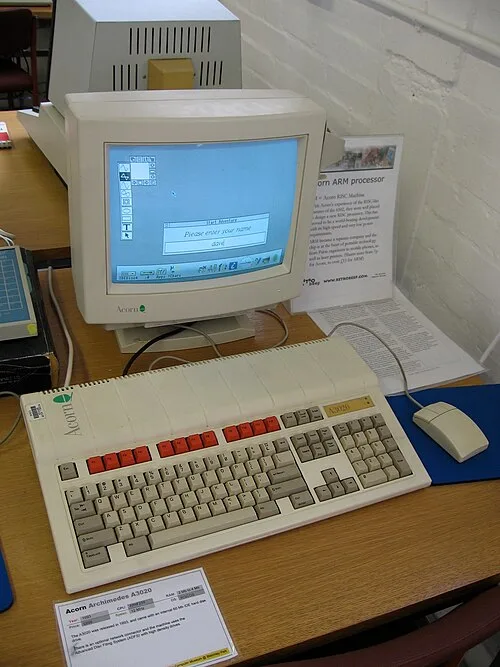
I was born in the mid-1980s and grew up during the peak era of accessible programming on personal computers, when switching a machine on dropped you straight into a BASIC prompt. Being born in the UK, my first language was BBC BASIC, which I started writing at eight years old on the Acorn Archimedes.
When getting my first PC in 1998 with dialup internet access, I installed the Netscape Suite, which included Netscape Composer. This was my first introduction to making websites using HTML. I made a few websites for programs I had made on the Acorn, as well as about my favourite video game, Sonic the Hedgehog.
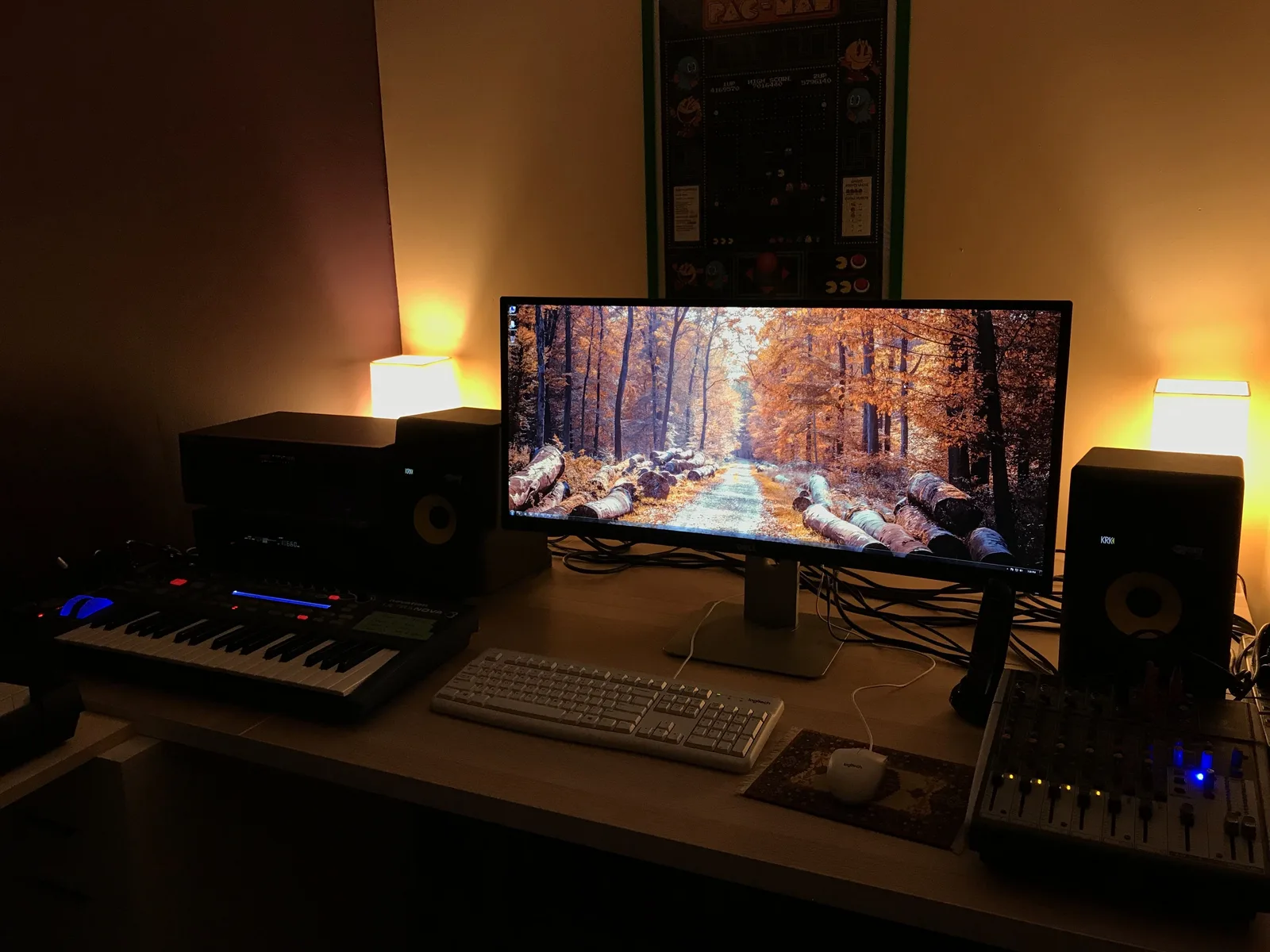
This interest in programming and web development continued, particularly as I became involved in online communities. Even while studying Music Composition at university in London, I still kept tinkering with PHP websites and making small utilities, often based around modding video games.
Shortly after graduating I moved to Canada, and I began my first job making websites at CompuMAX, using my knowledge of web development. Working there was a fantastic learning opportunity as I was able to sign the company up to the BizSpark program, and get Visual Studio for free, allowing me to learn C# to work on software.
After several years working in various roles, I landed at Fortinet. Building analytics dashboards, customizable charting tools, camera metadata and detection analytics, access control systems, and Docker-based cloud video infrastructure. You can see some of this in my software projects and work history.
Working at Fortinet has been a wonderful experience, with a great product manager and team. I've had the chance to learn the WPF framework while working in C#, to working on a cloud-based system, to more recently experimenting with AI technologies like Frigate.
Following the Covid pandemic I found myself more interested in policy and decision making, especially as I became more involved in community projects. Additionally, the work I was doing sat at the overlap of analytics, privacy, and regulation.
This led me to complete a Master of Arts in Public Policy online, studying alongside full-time work, with training in statistics, program evaluation, public finance, economics, governance. The economics module in particular changed how I view the world, while the Program Design module gave me useful tools for project planning.
Alongside work I have built a number of open-source projects, a webcam privacy filter, a Laravel booking platform, a CRT-emulating media player, and a voice agent for my kitchen. You can see the work on my projects page and on GitHub.
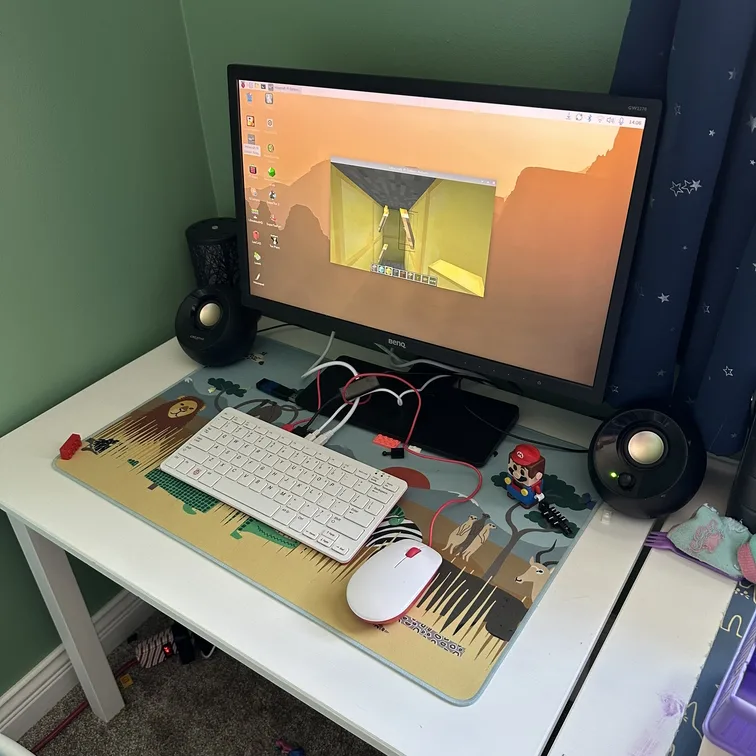
My life has benefitted from the belief that computing should be open and within everyone's reach. I like to think I'm keeping that tradition alive with my love of Raspberry Pi machines, which are sort of a spiritual successor to those old BBC Micros. While my son likes it mainly for Minecraft right now, it's simple, friendly nature invites the whole family to tinker and experiment with computing.